

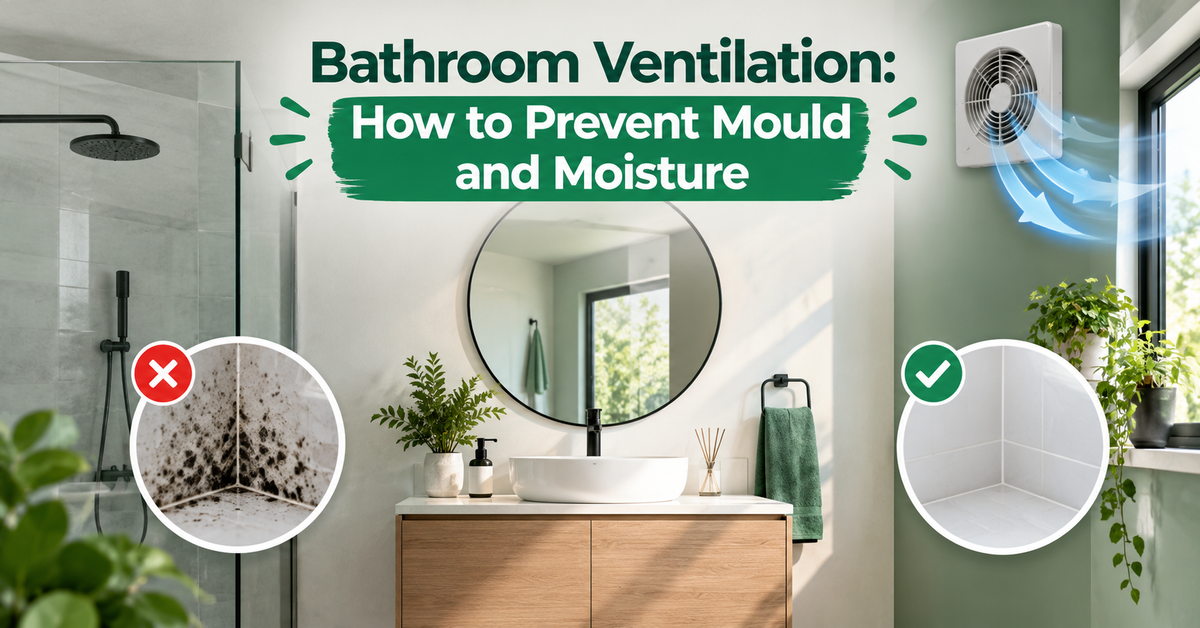
Bathroom Ventilation: How to Prevent Mould and Moisture
Every hot shower or bath releases litres of water vapour into a small, enclosed room. When that warm, moist air has nowhere to go, it settles on cooler surfaces such as mirrors, walls, ceilings and tile grout, where it turns back into water. Over time, that constant dampness creates the ideal conditions for mould, peeling paint and musty smells. The good news is that most moisture problems can be controlled with good bathroom ventilation.
1. Why Is Bathroom Ventilation Important?
Bathrooms produce more moisture than almost any other room in the home. Without enough airflow, that moisture lingers long after you have stepped out of the shower.
How Poor Ventilation Causes Condensation
Warm air holds more water vapour than cool air. When steamy air touches a cold mirror, window or ceiling, it cools quickly and releases that moisture as droplets. In a poorly ventilated bathroom, the air stays saturated, so condensation keeps forming instead of drying out.
The Connection Between Moisture and Bathroom Mould
Mould spores are present in almost every home. They only need moisture, warmth and something to feed on, such as soap scum or dust, to grow. A bathroom that stays damp for hours each day gives mould exactly what it needs.
How Excess Humidity Can Damage Paint, Grout and Fixtures
Ongoing bathroom moisture problems go beyond appearance. Humidity can cause paint to bubble and peel, break down silicone seals, stain grout, warp timber vanities and door frames, and dull the finish on some tapware and accessories.

2. What Are the Signs of Poor Bathroom Ventilation?
Spotting the early signs of a damp bathroom makes it much easier to fix the problem before it spreads.
Mirrors That Stay Foggy After Showering
Some fogging during a shower is normal. If your mirror is still misted 20 minutes later, the room is not clearing moisture fast enough.
Black Spots on Grout, Silicone and Ceilings
Small black, grey or green spots in corners, along silicone joints or on the ceiling above the shower are among the most common signs of bathroom mould.
Peeling Paint and Damp Walls
Bubbling, flaking paint or walls that feel cool and damp to the touch suggest humidity is soaking into surfaces rather than being removed.
Persistent Musty Smells
An earthy, stale smell that returns soon after cleaning often means moisture and mould are hiding somewhere, such as behind fixtures or in poorly sealed joints.
3. 9 Ways to Improve Bathroom Ventilation and Prevent Mould
If you are wondering how to prevent mould in a bathroom, the answer is a mix of the right equipment and simple daily habits. Here are nine practical steps for Australian homes.
1. Install the Right Bathroom Exhaust Fan
A correctly sized bathroom exhaust fan is the most reliable way to remove steam. Choose one with enough airflow for your room, and have it installed by a licensed electrician.
2. Run the Exhaust Fan During and After Showers
Switch the fan on as soon as you start showering, not when the room is already full of steam. Leave it running afterwards so it can clear the remaining moisture.
3. Open Bathroom Windows When Possible
If your bathroom has an openable window, use it. Fresh air helps carry humid air out, especially on dry, breezy days. Combining a window with an exhaust fan is usually more effective than either alone.
4. Make Sure the Exhaust Fan Vents Outdoors
A fan that dumps moist air into the roof space simply moves the problem elsewhere. The ducting should carry air to the outside of the building, where it cannot condense on roof timbers or insulation.
5. Clean Exhaust Fan Grilles and Filters Regularly
Dust and lint build up quickly on fan grilles and reduce airflow. Turn the power off and wipe or vacuum the grille every few months.
6. Wipe Down Wet Tiles, Mirrors and Shower Screens
A quick pass with a squeegee or microfibre cloth removes much of the water that would otherwise evaporate into the air. It also helps keep shower screens free of water spots and soap scum.
7. Keep Shower Doors or Curtains Open After Use
Leaving the shower door or curtain open lets the enclosure dry out instead of trapping humid air against the tiles and seals.
8. Dry Towels and Bath Mats Properly
Wet towels and mats slowly release moisture for hours. Hang them on a heated towel rail, a well-spaced rack or outside to dry. Practical bathroom accessories such as towel rails and towel hooks make it easier to spread towels out so they dry faster.
9. Use a Dehumidifier When Necessary
In humid climates such as Queensland and the Northern Territory, or during cold, damp winters, a portable dehumidifier can support your exhaust fan and help with bathroom moisture control.

4. How to Choose the Right Bathroom Exhaust Fan
The best bathroom exhaust fan for your home depends on room size, how the bathroom is used, noise tolerance and where the fan can be installed.
Understand Exhaust Fan Airflow Capacity
In Australia, fan airflow is usually listed in litres per second (L/s) or cubic metres per hour (m³/h). Larger bathrooms, rooms with high ceilings and family bathrooms with back-to-back showers need more capacity. Check the manufacturer's sizing guidance and confirm the minimum airflow required for your situation with your installer.
Choose a Quiet Fan for Everyday Use
A noisy fan often gets switched off early, which defeats its purpose. Look for the noise rating, usually shown in decibels (dB) or sones, and compare models. A quiet bathroom exhaust fan is especially worthwhile for ensuites near bedrooms.
Consider Ceiling-Mounted and Wall-Mounted Fans
Ceiling-mounted fans are the most common choice and work well when ducting can run through the roof space to the outside. Wall-mounted fans suit bathrooms on an external wall, where air can be expelled directly outdoors with a short path.
When Do You Need a Fan With a Humidity Sensor?
A humidity sensor exhaust fan turns on automatically when moisture rises and switches off once the air has cleared. It is a good option for households where people forget to use the fan, or for rental properties and windowless bathrooms. Fans with a run-on timer offer a similar benefit.
5. Bathroom Ventilation Without a Window
Many apartments, ensuites and internal bathrooms have no window at all, so they rely entirely on mechanical ventilation.
Can an Exhaust Fan Replace a Bathroom Window?
Yes, in most cases. A properly sized and correctly ducted exhaust fan can remove moisture effectively in a windowless bathroom. It simply needs to be used consistently and maintained well.
How to Improve Airflow in an Enclosed Bathroom
An exhaust fan can only remove air if replacement air can flow in. Leave a gap under the door, or keep the door slightly open after showering. A fan with a humidity sensor or run-on timer helps make sure moisture is cleared even after you leave the room.
Why Proper Exhaust Ducting Matters
Long, kinked or crushed ducting reduces airflow considerably. Ducting should be as short and straight as practical and discharge to the outdoors. If your fan seems weak, the ducting is often the culprit.
6. How Long Should You Run a Bathroom Exhaust Fan?
Run the fan for the whole shower and then for about 15 to 20 minutes afterwards. That is a practical starting point; the exact time depends on your fan's capacity, the size of the room and how much steam was produced.
Best Time to Turn the Fan On and Off
Turn the fan on before or as you start the shower so it begins removing moisture straight away. Turn it off only once the mirror is clear and surfaces are no longer visibly wet. A run-on timer or humidity sensor takes the guesswork out of this.
How to Tell Whether Your Bathroom Has Dried Properly
A well-ventilated bathroom should have a clear mirror, no droplets on the ceiling, and dry walls within a reasonable time after showering. If surfaces are still damp an hour later, your fan may be undersized, blocked or poorly ducted.

7. How to Remove Existing Bathroom Mould
Ventilation prevents new mould from forming, but it will not remove mould that is already there. Cleaning and prevention need to work together.
How to Clean Small Areas of Surface Mould
For small patches on tiles or painted surfaces, ventilate the room and wear gloves and eye protection. Many Australian health and cleaning guides recommend diluted white vinegar, applied and left for a while before wiping clean and drying the surface thoroughly. Avoid mixing cleaning products, especially bleach with other chemicals.
When Mould on Silicone or Grout Needs Professional Attention
Mould that has grown into silicone often cannot be fully cleaned because it sits beneath the surface. In that case, the silicone usually needs to be removed and replaced. Deeply stained or crumbling grout may also need regrouting.
When to Call a Qualified Professional
Recurring mould, large affected areas, water leaks, soft plasterboard or damaged building materials may point to a bigger problem. A plumber, waterproofing specialist or mould remediation professional can assess the cause and recommend repairs.
8. Common Bathroom Ventilation Mistakes to Avoid
Even a good exhaust fan cannot do its job if a few everyday habits work against it.
Switching the Exhaust Fan Off Too Soon
Turning the fan off as you leave the bathroom leaves most of the moisture behind. Let it run until the room has cleared.
Blocking Airflow Around the Bathroom Door
A tightly sealed door stops fresh air from replacing the air your fan removes. Keep a small gap under the door or leave it ajar after showering.
Ignoring a Noisy or Weak Exhaust Fan
Rattling, humming or weak suction can mean a worn motor, a blocked grille or a ducting issue. Have it checked rather than living with a fan that no longer works properly.
Relying on Air Fresheners to Mask Musty Smells
A musty smell is a warning sign, not just an odour. Covering it up allows the moisture problem behind it to keep growing.
Painting Over Mould Without Fixing the Moisture Source
Painting over mould hides it only temporarily. Unless the mould is cleaned and the dampness is fixed, it will usually return through the new paint.
9. Bathroom Ventilation Requirements in Australia
Ventilation requirements in Australia are set mainly through the National Construction Code (NCC), along with state and territory rules. What applies to your bathroom depends on the building type, when it was built or renovated, and your local requirements.
When Mechanical Ventilation May Be Required
Bathrooms generally need either natural ventilation, such as an openable window of adequate size, or mechanical ventilation, such as an exhaust fan. Bathrooms without suitable natural ventilation, including many internal bathrooms and apartment ensuites, typically require an exhaust system that meets minimum airflow standards.
Why Exhaust Air Must Be Discharged Appropriately
Recent editions of the NCC place greater emphasis on condensation management, including how exhaust air from bathrooms is discharged. In general, moist air should be directed outdoors rather than into a roof space or wall cavity, where it can cause condensation and hidden damage.
When to Consult a Licensed Electrician or Qualified Installer
Any new fan, replacement fan or ducting change should be handled by a licensed electrician or qualified installer who understands current requirements. If you are renovating, check with your builder, certifier or local council before work begins.
10. Simple Bathroom Ventilation Maintenance Checklist
A few minutes of regular bathroom cleaning and maintenance keeps your ventilation working as it should:
- Clean the exhaust fan grille every few months.
- Check that the fan still draws air (a tissue held near the grille should be pulled towards it).
- Inspect grout and silicone for recurring mould.
- Dry wet surfaces after showers.
- Check for leaks around taps, toilets and the shower base, and watch for persistent dampness.
- Make sure the bathroom dries fully between uses.
Conclusion
Good bathroom ventilation is the foundation of a dry, healthy, mould-free bathroom. A properly installed exhaust fan, regular cleaning and a few simple drying habits can make a noticeable difference to condensation, musty smells and mould growth.
If mould keeps coming back despite good ventilation, it may point to a fan fault, a ducting problem or a hidden water leak that needs further investigation.
Explore Living & Bathroom's range of bathroom tapware, bathroom vanities and bathroom accessories, or browse our full bathroom range to create a fresher, easier-to-maintain space.
Frequently Asked Questions
How do I ventilate my bathroom to prevent mould?
Run a correctly sized exhaust fan that vents outdoors during every shower and for 15 to 20 minutes afterwards. Open a window when possible, wipe down wet surfaces, and let towels and the shower area dry fully.
How long should a bathroom exhaust fan run after a shower?
Around 15 to 20 minutes is a good starting point. Keep it running until the mirror is clear and surfaces are no longer wet.
Is an exhaust fan enough to prevent bathroom mould?
Often, but not always. The fan must be the right size, vent outdoors and be used consistently. Drying surfaces and fixing leaks are also important.
How do you ventilate a bathroom without a window?
Use a correctly sized exhaust fan ducted to the outside, ideally with a humidity sensor or run-on timer. Allow fresh air in through a gap under the door.
Why does my bathroom get mould even with an exhaust fan?
The fan may be too small, blocked with dust, poorly ducted or switched off too early. A hidden leak or failed waterproofing can also cause ongoing dampness.
Where should a bathroom exhaust fan vent to?
Outdoors. Venting into a roof space or wall cavity can lead to condensation, mould and damage elsewhere in the home.
Does opening a bathroom window help prevent mould?
Yes. An open window lets humid air escape and fresh air in. It works best alongside an exhaust fan, especially in cold or humid weather.
What is the best way to reduce moisture in a bathroom?
Combine an effective exhaust fan with good habits: run it long enough, squeegee wet surfaces, dry towels properly and keep the room open to airflow after use.