
Why Choosing the Right Kitchen Sink Material Matters
The kitchen sink is one of the most frequently used fixtures in any home. From washing dishes and preparing food to cleaning fruits and vegetables, the sink plays a central role in everyday kitchen tasks. Because of this constant use, choosing the right kitchen sink material is very important for both functionality and durability.
One of the main reasons material selection matters is durability. A kitchen sink needs to withstand heavy use, exposure to water, and contact with different cleaning products. If the material is not durable enough, it may develop scratches, stains, or damage over time. Choosing a strong and reliable material helps ensure that the sink lasts for many years.
Maintenance is another key factor to consider. Some materials require more cleaning and care than others. For example, certain sinks may show water spots or scratches easily, while others are more resistant to stains and marks. Selecting a material that is easy to maintain can save time and effort in daily cleaning.
The material also affects the overall appearance of your kitchen. The sink should complement other elements such as countertops, cabinets, and appliances. By selecting the right kitchen sink material, you can achieve a balance between durability, functionality, and visual appeal.
Factors to Consider When Choosing a Kitchen Sink Material
Before deciding on the best kitchen sink material, it is important to consider several factors that affect how the sink will perform in your daily routine. Every household has different cooking habits and kitchen layouts, so understanding these factors can help you make a more practical choice.
Durability
Durability is one of the most important factors when selecting a kitchen sink. The sink must handle heavy cookware, sharp utensils, and constant use without becoming damaged. Materials that resist scratches, dents, and heat are usually better suited for everyday use. A durable sink will maintain its appearance and performance even after years of daily activity.
Maintenance
Maintenance requirements vary depending on the material of the sink. Some materials are easier to clean and resist stains, while others may require regular care to maintain their finish. For busy households, choosing a low maintenance material can make kitchen cleaning much simpler.
Cost
Budget is another important consideration when choosing a kitchen sink. Different materials come at different price points. While some premium materials may offer exceptional durability and style, more affordable options can still provide excellent performance for everyday use. Finding the right balance between cost and quality is important when selecting a sink.
Style and Appearance
The sink is a visible part of the kitchen design, so its appearance should match the overall style of the space. Some materials create a modern and sleek look, while others offer a more traditional or rustic appearance. Choosing a sink material that complements your kitchen design helps create a cohesive and attractive space.
Most Popular Kitchen Sink Materials
Kitchen sinks are available in a variety of materials, and each type offers different advantages. Understanding the characteristics of these materials can help homeowners choose the option that best fits their needs, lifestyle, and kitchen design.
Stainless Steel Sinks
Stainless steel is one of the most common materials used for kitchen sinks. It is popular because it is durable, affordable, and easy to maintain. Stainless steel kitchen sinks are resistant to heat and stains, making them suitable for everyday kitchen activities.
Another advantage of stainless steel is its modern appearance. The sleek metallic finish works well with many kitchen styles, especially contemporary designs. However, stainless steel sinks can sometimes show water spots or minor scratches over time, although many modern models are designed to minimize these issues.

Granite Composite Sinks
Granite composite sinks are made from a combination of granite stone and resin materials. This creates a strong and durable surface that resists scratches, stains, and heat. These sinks are known for their matte finish and modern appearance.
Granite composite kitchen sinks are also available in several colors, allowing homeowners to match the sink with their kitchen countertops and cabinets. Because of their strength and durability, they are often considered a good choice for busy kitchens.

Kitchen Sink Material Comparison
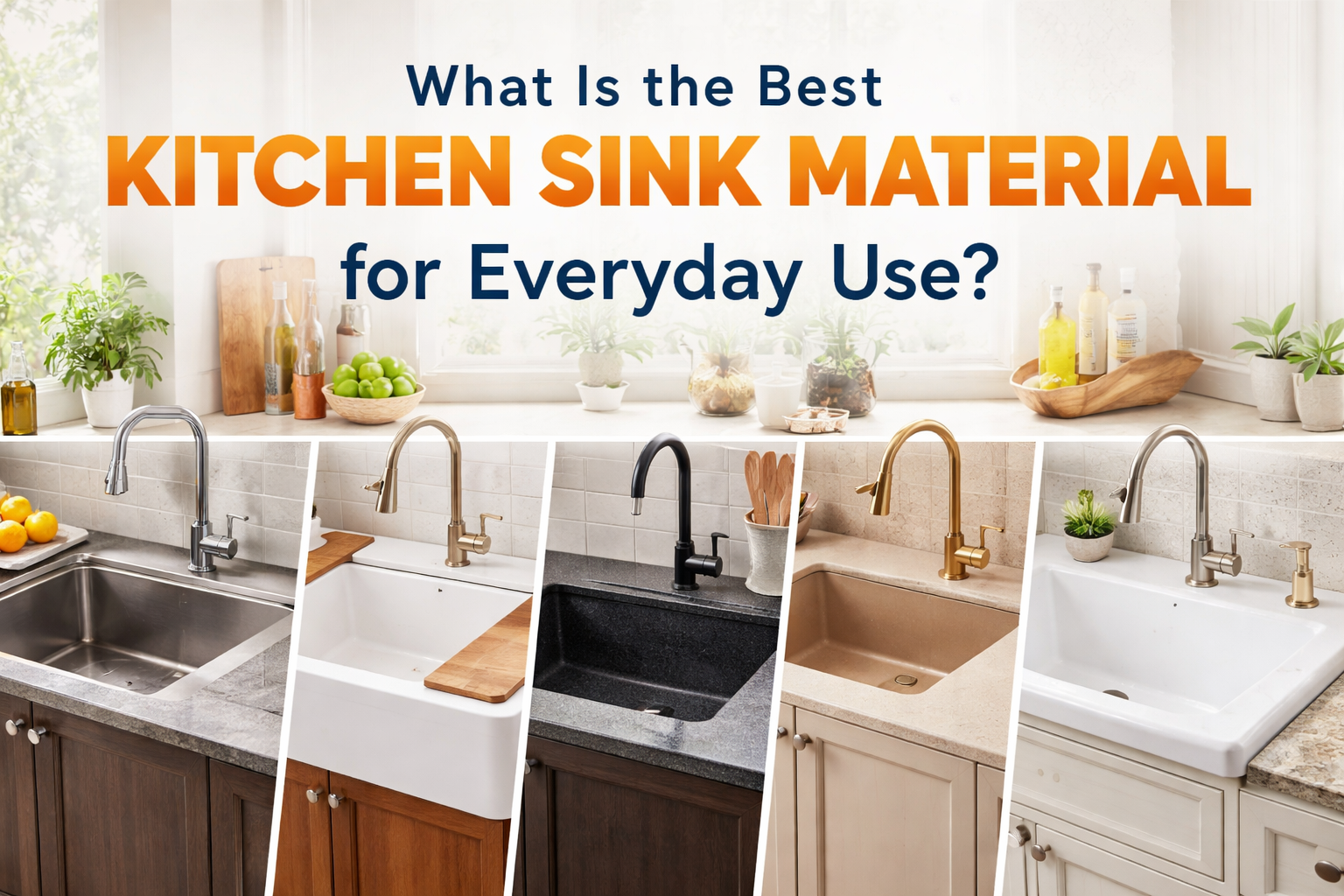
Choosing the best kitchen sink material becomes easier when you compare the main options side by side. Each material offers different advantages in terms of durability, maintenance, cost, and appearance. Understanding these differences helps homeowners select a sink that matches their cooking habits and kitchen style.
Stainless steel sinks are often considered one of the best options for everyday use. They are lightweight, affordable, and highly resistant to heat and stains. Stainless steel sinks also fit well in modern kitchens because of their sleek metallic appearance. However, they may show water spots and scratches over time.
Granite composite sinks are known for their durability and resistance to scratches and stains. The surface is strong enough to handle heavy cookware and high temperatures. These sinks also come in several colors, making them a stylish option for modern kitchens. Compared to stainless steel, they are usually heavier and slightly more expensive.
Fireclay sinks are valued for their classic farmhouse appearance. They have a smooth and glossy finish that resists stains and scratches. Fireclay sinks are durable but can be heavy and may require strong cabinet support during installation.
Cast iron sinks are extremely strong and long lasting. Their enamel coating provides a glossy finish and protects the sink from rust. These sinks are available in various colors, but they are heavier than most other sink materials and may require careful installation.
Quartz composite sinks combine natural quartz with resin to create a durable and attractive surface. They are resistant to stains, scratches, and heat, making them a good choice for busy kitchens. Their surface also helps reduce noise when washing dishes.
Which Kitchen Sink Material Is Best for Everyday Use?
The best kitchen sink material for everyday use depends on how you use your kitchen and what features you value most. For many households, durability, ease of maintenance, and resistance to stains are the most important factors.
Stainless steel is often considered one of the best overall options for everyday use. It is affordable, durable, and resistant to heat and stains. It also works well in both modern and traditional kitchens. Because stainless steel sinks are lightweight and widely available, they remain a practical choice for many homes.
Granite composite sinks are another excellent option for daily use. They are extremely durable and resistant to scratches and stains. Their strong surface makes them ideal for busy kitchens where heavy cookware and frequent cleaning are common.
Quartz composite sinks also perform very well in everyday situations. They are durable and offer a modern appearance while being quieter than stainless steel sinks during dishwashing.
If you prefer a more traditional kitchen style, fireclay sinks can also be a good option. Their glossy surface resists stains and provides a classic farmhouse look.
Overall, materials such as stainless steel, granite composite, and quartz composite are often considered the most practical choices for everyday kitchen use because they combine durability, easy maintenance, and long term reliability.
Tips for Choosing the Right Kitchen Sink for Your Home
Choosing the right kitchen sink involves more than selecting a material. Several practical factors can help ensure that the sink works well with your kitchen layout and daily routine.
One important step is considering how often you use your kitchen. If you cook frequently and wash many dishes, choosing a durable material that resists scratches and stains is essential. Busy kitchens usually benefit from strong materials such as stainless steel or granite composite.
The size of the sink is another important factor. Larger sinks provide more space for washing dishes and preparing food, while smaller sinks may be more suitable for compact kitchens. Measuring your countertop space before choosing a sink helps ensure a proper fit.
It is also helpful to consider the depth of the sink. Deeper sinks can hold more dishes and reduce splashing during washing. However, very deep sinks may require more bending, which may not be comfortable for everyone.
Matching the sink with your countertop material is another important design consideration. For example, granite composite sinks often pair well with stone countertops, while stainless steel sinks complement modern kitchen designs.
Finally, think about additional features such as sound reduction or protective coatings. Some sinks include insulation that reduces noise when washing dishes. These features can improve comfort and functionality in everyday kitchen use.
Common Mistakes to Avoid When Choosing Kitchen Sink Material
When selecting a kitchen sink, some homeowners focus mainly on appearance and overlook important practical factors. Avoiding common mistakes can help you choose a sink that performs well for many years.
One common mistake is choosing a sink based only on its design. While appearance is important, durability and maintenance requirements should also be considered. A sink that looks attractive but scratches easily may not be suitable for heavy daily use.
Another mistake is ignoring maintenance needs. Some materials require more care to maintain their finish. Choosing a sink that is easy to clean can save time and effort in daily kitchen routines.
Many people also underestimate the importance of size. A sink that is too small may not provide enough space for washing dishes, while a sink that is too large may not fit comfortably within the countertop area.
Another mistake is not considering the weight of the sink. Materials such as cast iron and fireclay are much heavier than stainless steel. Proper cabinet support is necessary to ensure safe installation.
By avoiding these common mistakes, homeowners can select a kitchen sink material that meets their practical needs while also enhancing the overall design of the kitchen.
Conclusion
Choosing the right kitchen sink material is an important decision because the sink is used every day for cooking, cleaning, and food preparation. A durable and well designed sink can make kitchen tasks easier while also improving the appearance of the space.
Materials such as stainless steel, granite composite, and quartz composite are often considered some of the best options for everyday use because they offer durability, resistance to stains, and easy maintenance. Traditional materials such as fireclay and cast iron also provide strong performance while adding a classic design element to the kitchen.
The best choice ultimately depends on your kitchen style, cooking habits, and budget. By considering durability, maintenance, and design, you can select a sink that works well for your household.
If you are planning to upgrade your kitchen, explore our kitchen sink collection to discover durable and stylish options designed for everyday use.
FAQs
What is the most durable kitchen sink material?
Granite composite and quartz composite sinks are among the most durable materials because they resist scratches, stains, and heat. Stainless steel is also very durable and widely used in modern kitchens.
Is stainless steel the best kitchen sink material?
Stainless steel is one of the most popular choices because it is affordable, durable, and easy to maintain. It works well for everyday kitchen tasks and suits many kitchen styles.
What kitchen sink material is easiest to maintain?
Stainless steel and granite composite sinks are generally easy to maintain because they resist stains and can be cleaned with simple household cleaners.
Are granite composite sinks better than stainless steel?
Granite composite sinks are more resistant to scratches and stains, while stainless steel sinks are lighter and usually more affordable. The better option depends on personal preference and kitchen usage.
Which kitchen sink material lasts the longest?
High quality materials such as cast iron, granite composite, and stainless steel can last for many years when properly maintained, making them reliable choices for everyday kitchen use.