
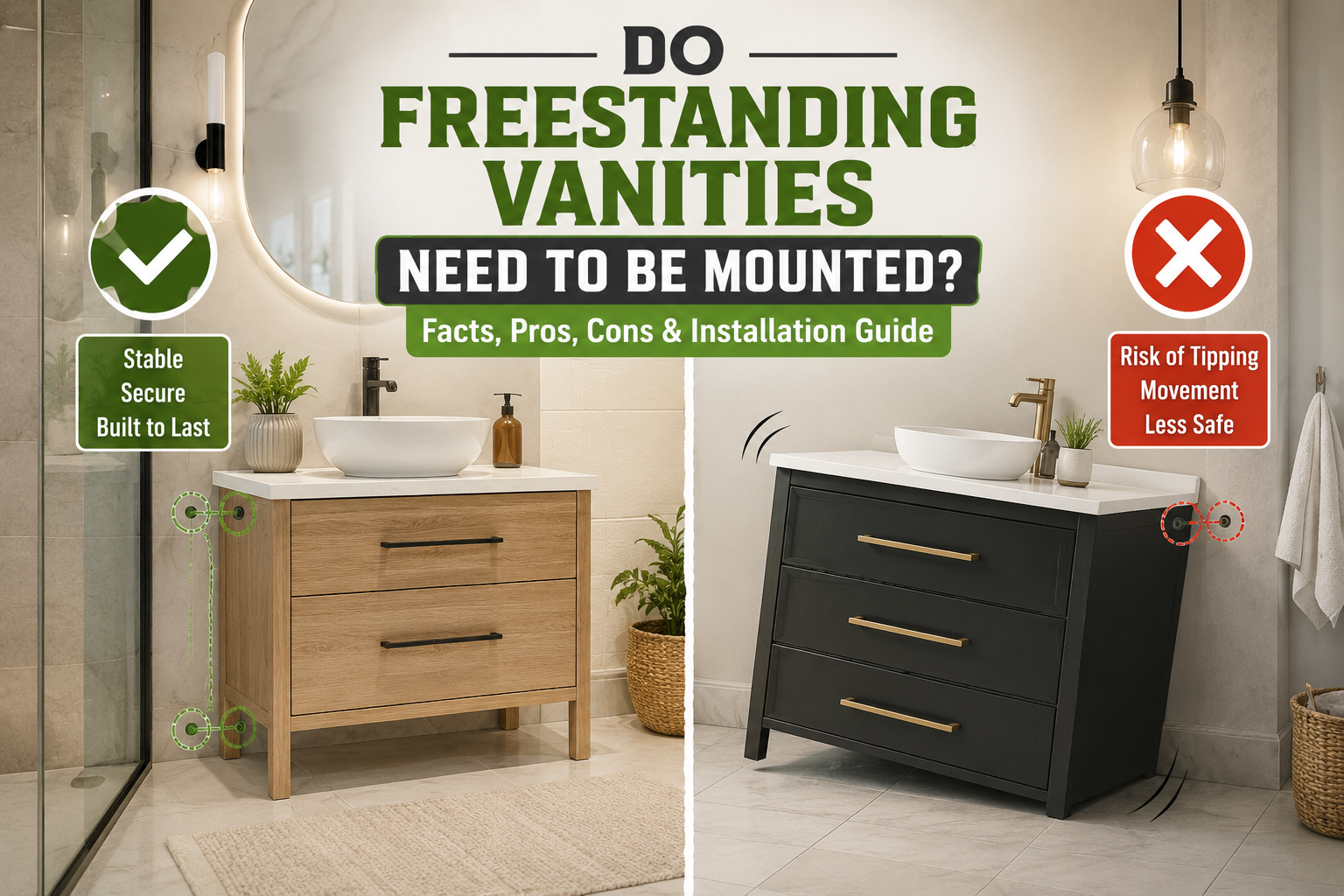
Do Freestanding Vanities Need to Be Mounted?
Freestanding vanities are a popular choice in modern bathroom design because they combine practical storage with a stylish, furniture-like appearance. However, many homeowners ask the same question during a renovation: do freestanding vanities need to be mounted? While freestanding vanities are designed to stand on the floor, installation requirements can vary depending on the vanity design, wall structure, and local building standards. In some cases, securing the vanity to the wall may improve stability and safety. In this guide, we'll explain whether freestanding vanities need to be mounted, explore the benefits of wall fixing, and help you determine the best installation approach for your bathroom.
Do Freestanding Vanities Need to Be Mounted?
The short answer is that most freestanding vanities are designed to stand independently on the floor, but in many situations they are still secured to the wall during installation. While mounting may not always be structurally required, it is often recommended to improve stability, safety, and long-term performance.

Understanding How Freestanding Vanities Are Designed
Unlike wall-hung vanities, freestanding vanities transfer most of their weight directly to the floor through their base or legs.
Because they are supported from underneath, they do not rely on wall brackets for primary structural support. This makes them easier to install and suitable for a wide range of bathroom layouts.
Many homeowners choose freestanding vanities because they provide a furniture-style appearance while offering generous storage space and simple installation.
When Wall Mounting Is Recommended
Although freestanding vanities can technically stand on their own, many manufacturers and installers recommend securing them to the wall.
Wall fixing can help prevent movement over time, especially when drawers are opened frequently or when the vanity supports a heavy stone benchtop. Securing the vanity also reduces the risk of accidental tipping and helps maintain alignment with plumbing connections.
In family bathrooms and homes with young children, additional stability can be particularly beneficial.
Building Codes and Installation Standards
Installation requirements may vary depending on local building regulations and manufacturer recommendations.
Some vanity models include wall-fixing brackets as part of the installation system, while others simply recommend securing the unit for additional safety. Following the manufacturer's instructions helps ensure proper installation and warranty compliance.
If you're unsure, consulting a qualified installer can help determine the best approach for your specific vanity and bathroom layout.
Does Mounting Affect the Appearance?
One common concern among homeowners is whether wall fixing will alter the appearance of the vanity.
In most cases, wall mounting hardware remains hidden behind the vanity and does not affect the overall design. The vanity still maintains its freestanding appearance while benefiting from additional stability.
As a result, wall fixing often provides the best combination of aesthetics and practicality.
Why Some Freestanding Vanities Are Secured to the Wall
Even though freestanding vanities are designed to rest on the floor, many professional installers choose to secure them to the wall as an added precaution. Understanding the reasons behind this practice can help homeowners make more informed installation decisions.
Improved Stability
One of the main reasons for securing a freestanding vanity is to increase stability.
Over time, daily use can place stress on the vanity, particularly when drawers and cabinet doors are opened repeatedly. Wall fixing helps minimise movement and keeps the vanity securely positioned.
This added support can be especially valuable for larger vanities with wider benchtops and multiple storage compartments.
Enhanced Safety
Safety is another important consideration.
Although freestanding vanities are generally stable, securing them to the wall reduces the possibility of tipping or shifting. This is particularly important in households with children, where climbing or leaning on furniture may occur.
Wall fixing provides an extra layer of protection and helps ensure the vanity remains securely in place.
Better Support for Heavy Benchtops
Many modern bathroom vanities feature stone, ceramic, or engineered stone benchtops.
These materials can add significant weight to the vanity unit. While the floor supports most of the load, wall fixing can help prevent movement and improve overall structural stability.
The larger and heavier the vanity, the greater the potential benefit of additional wall support.
Long-Term Durability
Securing the vanity can also contribute to long-term durability.
Reducing movement helps minimise stress on plumbing connections, benchtops, and cabinet joints. This can help preserve the vanity's appearance and functionality over many years of use.
For homeowners investing in a premium vanity, wall fixing is often considered a worthwhile precaution.
Pros and Cons of Mounting a Freestanding Vanity
Mounting a freestanding vanity offers several benefits, but it may not be necessary in every situation. Understanding both the advantages and disadvantages can help you determine the most appropriate installation method for your bathroom.
Pros of Mounting a Freestanding Vanity
Increased Stability
Wall fixing helps keep the vanity securely positioned and reduces the likelihood of movement over time.
This can be particularly beneficial for larger vanities, heavy benchtops, and high-traffic family bathrooms.
Improved Safety
Securing the vanity reduces the risk of tipping and provides additional protection in homes with children or pets.
The extra stability can offer greater peace of mind for homeowners.
Better Protection for Plumbing Connections
Movement within the vanity can place stress on water supply lines and waste pipes.
By keeping the vanity firmly secured, wall mounting may help protect plumbing connections and reduce the likelihood of future issues.
Enhanced Longevity
Reducing movement and structural stress can contribute to the long-term durability of the vanity, helping it maintain its appearance and performance.
Cons of Mounting a Freestanding Vanity
Slightly More Complex Installation
Wall fixing may add an extra step to the installation process.
Depending on the wall construction and vanity design, additional brackets or hardware may be required.
Limited Flexibility for Future Relocation
Once secured to the wall, relocating the vanity may require additional work.
Homeowners planning future renovations or layout changes should keep this in mind when deciding whether to mount the unit.
Not Always Necessary
For smaller vanities with lightweight benchtops, wall fixing may provide limited practical benefit.
In some cases, the vanity may already be sufficiently stable when properly installed on a level floor.
Potential Wall Repairs if Removed
If the vanity is later removed or repositioned, minor wall repairs may be required where mounting brackets or fasteners were installed.
However, these repairs are usually straightforward and relatively inexpensive.
Also Read: Freestanding Vs Wall Hung Vanities: Which Is Better?
How Freestanding Vanities Are Typically Installed
Proper installation plays an important role in ensuring a freestanding vanity remains stable, functional, and visually appealing. While installation methods may vary slightly depending on the vanity model, most freestanding vanities follow a similar process.
Preparing the Bathroom Wall
Before installation begins, the wall and floor should be checked to ensure they are in good condition and suitable for supporting the vanity.
Installers typically identify plumbing locations, wall studs, and fixing points before positioning the vanity. Proper preparation helps avoid installation issues and ensures the vanity sits correctly within the available space.
If wall fixing is recommended, locating secure mounting points is an important first step.
Positioning and Levelling the Vanity
Once the area has been prepared, the vanity is placed in its desired location.
The unit should sit evenly on the floor without rocking or shifting. Installers use levelling tools to ensure the vanity is perfectly aligned, as even minor floor irregularities can affect stability and appearance.
Proper levelling also helps ensure drawers and cabinet doors operate smoothly.
Connecting Plumbing
After positioning the vanity, the plumbing connections are installed.
Water supply lines, waste pipes, and basin fittings are connected according to the bathroom layout and vanity design. Accurate plumbing alignment is essential for preventing leaks and ensuring reliable performance.
Professional installation is often recommended for this stage to ensure compliance with local plumbing regulations.
Securing the Vanity to the Wall
If wall fixing is required or recommended, the vanity is secured using appropriate brackets or fasteners.
The fixing points are usually concealed behind the cabinet, allowing the vanity to maintain its freestanding appearance. This step helps minimise movement, improve stability, and provide additional support for heavy benchtops.
The exact fixing method will depend on the vanity design and the wall construction.
Final Checks Before Use
Before the installation is completed, several final checks should be carried out.
The installer will confirm that the vanity is level, secure, and properly connected to the plumbing system. Drawers and doors should open smoothly, and all fittings should be checked for leaks or alignment issues.
These final inspections help ensure the vanity is ready for long-term use.
Freestanding Vanity vs Wall-Hung Vanity
Freestanding and wall-hung vanities are two of the most popular vanity styles available today. While both can enhance the appearance and functionality of a bathroom, they differ significantly in design, installation, and maintenance requirements.
Installation Differences
Freestanding vanities are generally easier to install because they rest directly on the floor and support most of their own weight.
Wall-hung vanities, by contrast, rely entirely on wall mounting systems and require strong structural support within the wall. This often makes installation more complex and may require additional reinforcement.
For many homeowners, freestanding vanities offer a simpler and more straightforward installation process.
Storage Capacity
Freestanding vanities often provide more storage space than wall-hung alternatives.
Because they extend fully to the floor, they can accommodate larger cabinets, deeper drawers, and increased internal storage capacity. This makes them particularly useful in family bathrooms where storage is a priority.
Wall-hung vanities typically sacrifice some storage space in favour of a lighter, more minimalist appearance.
Cleaning and Maintenance
Wall-hung vanities create open floor space beneath the cabinet, making it easier to clean underneath.
Freestanding vanities sit directly on the floor, which may require slightly more effort when cleaning around the base. However, modern freestanding designs often include streamlined profiles that remain relatively easy to maintain.
Both options can be practical depending on the homeowner's cleaning preferences.
Design and Appearance
Freestanding vanities offer a furniture-inspired appearance that works well in both traditional and contemporary bathrooms.
Wall-hung vanities create a floating effect that is particularly popular in modern and minimalist interiors. Their elevated design can also make smaller bathrooms feel more spacious.
The best choice often depends on the overall style and atmosphere you wish to create.
Which Option Is Better?
Neither option is universally better than the other.
Freestanding vanities are ideal for homeowners seeking generous storage, straightforward installation, and classic appeal. Wall-hung vanities are often preferred by those looking for a sleek, contemporary appearance and easier floor cleaning.
Ultimately, the right choice depends on your bathroom layout, storage needs, and design preferences.
Common Mistakes to Avoid During Freestanding Vanity Installation
Even a high-quality vanity can encounter problems if it is not installed correctly. Avoiding these common mistakes can help ensure a safe, durable, and visually appealing result.
Ignoring Manufacturer Instructions
Every vanity model is designed differently and may have specific installation requirements.
Ignoring the manufacturer's guidelines can lead to stability issues, plumbing complications, or warranty concerns. Always review the installation instructions carefully before beginning the project.
Skipping Wall Fixings When Recommended
Some homeowners assume wall fixing is unnecessary because the vanity stands on the floor.
However, if the manufacturer recommends securing the unit, skipping this step may reduce stability and increase the risk of movement over time. Following the recommended installation method helps maximise safety and performance.
Not Checking Floor Level
An uneven floor can affect both the appearance and functionality of a vanity.
If the vanity is not level, drawers may not operate correctly, doors may become misaligned, and the unit may feel unstable. Taking the time to level the vanity properly can prevent many common issues.
Incorrect Plumbing Alignment
Poorly aligned plumbing connections can create unnecessary stress on pipes and fittings.
This may increase the risk of leaks, drainage issues, or future repairs. Accurate positioning during installation helps ensure reliable long-term performance.
Using Inadequate Fasteners
When wall fixing is required, using the correct fasteners is essential.
Low-quality or unsuitable fixings may fail to provide adequate support, particularly for larger vanities with heavy benchtops. Selecting appropriate mounting hardware helps maintain stability and safety.
Also Read: Tips for Maximising Storage Space with Bathroom Vanity Units
Conclusion
So, do freestanding vanities need to be mounted? In most cases, they are designed to stand independently on the floor, but securing them to the wall is often recommended for improved stability, safety, and long-term durability. Factors such as vanity size, benchtop weight, household requirements, and manufacturer guidelines all play a role in determining the best installation method. By following proper installation practices and considering wall fixing where appropriate, homeowners can enjoy a secure and attractive vanity for years to come. If you're looking for high-quality freestanding vanities, explore the extensive collection available at Living and Bathroom to find the perfect option for your renovation project.
Frequently Asked Questions
Can a freestanding vanity stand without wall support?
Yes. Most freestanding vanities are designed to stand independently on the floor. However, many installers still recommend securing them to the wall for additional stability and safety.
Is it mandatory to secure a freestanding vanity?
Not always. Requirements vary depending on the vanity design, manufacturer recommendations, and local building standards. In many cases, wall fixing is recommended rather than mandatory.
Do all freestanding vanities come with mounting brackets?
No. Some models include brackets or fixing hardware, while others simply provide installation recommendations. Always check the manufacturer's specifications before installation.
Can I install a freestanding vanity myself?
Experienced DIY renovators may be able to install a freestanding vanity, but plumbing work often requires professional assistance to ensure compliance with local regulations.
Are freestanding vanities more stable than wall-hung vanities?
Because they rest directly on the floor, freestanding vanities are naturally stable. However, both vanity types can provide excellent stability when installed correctly.