Article: Linear vs Point Shower Drains: Which Is Better?
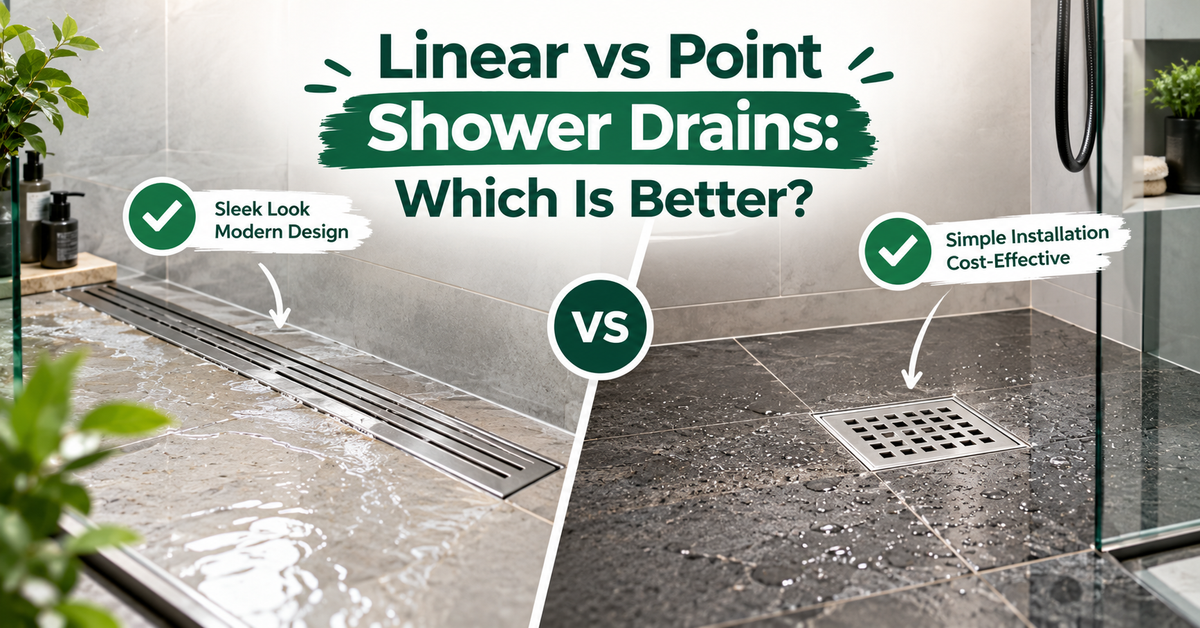
Linear vs Point Shower Drains: Which Is Better?
Linear vs point shower drains: which is better? This depends on your shower layout, floor tiles, budget and plumbing. Your drain controls how fast water leaves the floor, how the floor is graded, how easy the shower is to clean and how the whole bathroom looks.
A linear shower drain is a long, narrow channel, usually set along a wall or across the shower entry. A point shower drain is a compact square or round outlet, usually near the centre of the shower floor. Both work well when correctly sized and installed. This guide compares them so you can choose with confidence.
1. What Is a Linear Shower Drain?
A linear shower drain, also called a channel drain or strip drain, collects water along a long, narrow channel. Water runs into the channel and flows to a single waste outlet beneath it.
How Linear Shower Drains Work
The shower floor slopes towards the channel in one direction, like a gently tilted plane. The channel then carries water to the outlet connected to the waste pipe.
Common Linear Drain Designs and Positions
Linear drains come in lengths from about 600 mm to the full width of the shower. Common positions are along the back wall, across the shower entry, or along one side. Grates include slotted, square-pattern and tile-insert styles, where your floor tile sits inside the grate frame so the drain almost disappears.
Benefits of Linear Shower Drains
- Works with large-format tiles because the floor slopes one way
- Clean, contemporary look
- Suits walk-in and step-free shower designs
- Wide collection area along the channel
Potential Drawbacks to Consider
Linear drains usually cost more to buy and install. They need careful planning of floor levels and waterproofing, and the longer channel has more surface to clean.
2. What Is a Point Shower Drain?
A point shower drain, often called a centre floor waste or shower floor waste, is the traditional drain found in most Australian showers. Water flows from every direction to one compact outlet.
How Point Shower Drains Work
The floor is graded from all sides towards the drain, creating a shallow funnel shape. Tilers usually make diagonal "envelope" cuts so the tiles follow these slopes.
Common Square and Round Drain Designs
Most point drains are 100 mm square or round, with slotted, perforated or tile-insert covers. Many sit in the centre of the shower, but they can be offset to suit the plumbing and tile layout.
Benefits of Point Shower Drains
- Usually the most economical option
- Simple to install in conventional layouts
- Wide choice of styles and finishes
- Easy to replace like-for-like in a renovation
Potential Drawbacks to Consider
The four-way floor slope makes large-format tiles harder to lay, often needing extra cuts or smaller tiles and mosaics. A point drain is also more visible in the middle of the floor.

3. Linear vs Point Shower Drains: Key Differences
The table below compares linear vs point shower drains side by side. Neither wins every category, so focus on the rows that matter most for your bathroom.
|
Feature |
Linear shower drain |
Point shower drain |
|---|---|---|
|
Design |
Long, narrow channel |
Compact square or round outlet |
|
Floor grading |
Usually one-direction slope |
Slopes from several sides towards the outlet |
|
Tile compatibility |
Suits large-format tiles |
Best with smaller tiles or mosaics |
|
Placement |
Along a wall, at the entry or one side |
Centre or offset point in the shower floor |
|
Drainage |
Wide collection area; depends on outlet size |
Depends on outlet size and grading |
|
Installation |
Needs more careful level and waterproofing planning |
Simpler in conventional layouts |
|
Cost |
Usually higher for product and labour |
Usually more economical |
|
Cleaning |
Lift grate, clear channel and outlet |
Lift cover, clear hair and trap |
|
Look |
Sleek, modern, minimal |
Classic, practical, more visible |
|
Walk-in showers |
Very well suited |
Possible with careful design |
In short, a linear drain usually wins on looks and tile flexibility, while a point drain usually wins on cost and simplicity.
4. Which Shower Drain Offers Better Drainage?
Shape alone does not decide drainage speed. A well-sized point drain on a correctly graded floor can outperform a poorly installed linear drain.
Water Flow and Drainage Capacity
Capacity depends on the outlet diameter, the open area of the grate and the waste pipe. Check the manufacturer's flow rating against your shower setup, especially if you are fitting large rain shower heads or twin shower sets.
How Floor Slope Affects Water Removal
Shower floors need a consistent fall towards the drain. Australian building requirements commonly call for a fall of around 1:60 to 1:80 in the shower area; your plumber or waterproofer will confirm what applies to your project.
Preventing Standing Water and Pooling
Pooling usually comes from flat spots in the screed, uneven tiles or a partly blocked grate, not from the drain style itself.
Choosing a Drain for High-Use Showers
For large families or high-flow shower heads, choose a drain with a generous outlet and a high-flow grate. A full-width linear drain gives the widest collection area.

5. Which Shower Drain Is Better for Bathroom Design?
The drain is small, but it affects tile layout and how finished the floor looks.
Linear Drains for Modern and Minimalist Bathrooms
A slim channel along the wall keeps the floor visually uninterrupted. Tile-insert grates make it almost invisible.
Point Drains for Classic and Practical Designs
A polished square or round point drain suits classic bathrooms, small showers and budget-friendly renovations. Tile-insert point drains also look neat.
Which Drain Works Better With Large-Format Tiles?
A linear drain is usually the better choice for large tiles, because a one-way slope means fewer cuts. Large tiles on a four-way slope can create lips and uneven edges.
How Drain Placement Affects the Shower's Appearance
A wall-side linear drain moves the visual focus away from the floor, while an entry drain keeps water inside a walk-in shower. Pair either drain with a matching frameless shower screen for a cohesive look.

6. Linear vs Point Shower Drains: Installation and Cost
The drain itself is a small part of the bill. Floor preparation, waterproofing and labour usually cost far more.
Installation Requirements for Linear Drains
A linear drain needs accurate floor levels, a one-way fall and careful waterproofing around the channel. Retrofitting into an existing shower usually means removing the tiles and screed.
Installation Requirements for Point Drains
Point drains suit standard plumbing positions and are familiar to most plumbers and tilers. Replacing an old point drain with a new one is often straightforward.
Waterproofing and Floor-Fall Considerations
In Australia, wet-area waterproofing must comply with AS 3740 and the National Construction Code, and drainage work must comply with AS/NZS 3500 and be done by a licensed plumber. Choose WaterMark-certified drainage products. The Australian Building Codes Board explains the NCC and the WaterMark scheme.
Factors That Affect Total Installation Cost
- Drain type, length and material (stainless steel or brass costs more)
- Whether existing plumbing must move
- Floor preparation and waterproofing
- Tile size and the number of cuts
- Local labour rates
Ask your bathroom installer for a quote that lists drain supply, plumbing, waterproofing and tiling separately.
7. Which Shower Drain Is Easier to Clean and Maintain?
Both drain types need the same basic care. A point drain has a smaller area to clean; a linear drain's grate lifts out in one piece, giving easy access to the whole channel.
Cleaning Hair and Debris From Linear Drains
Lift the grate, remove the hair catcher if fitted, and wipe the channel. A soft brush and mild detergent are enough for weekly cleaning.
Maintaining Point Drain Covers and Traps
Unscrew or lift the cover, pull out hair and soap build-up, then flush with warm water. Some point drains include a removable hair basket.
How to Prevent Blockages and Unpleasant Smells
- Clean the grate or cover weekly
- Fit a hair catcher if the drain allows it
- Run water regularly in guest showers so the trap does not dry out
- Avoid harsh acids that can damage stainless steel and seals
What to Check if Water Drains Slowly
First clear the grate and trap. If water still drains slowly, the blockage may be further down the pipe, or the floor fall may be uneven; call a licensed plumber.
8. Which Shower Drain Is Best for a Walk-In or Accessible Shower?
For most walk-in showers, a linear drain is the easier route to a level, open floor, but good design matters more than drain type.
Linear Drains for Curbless Walk-In Showers
A linear drain at the shower entry or along the back wall lets the floor fall in one direction, so you can avoid a raised hob. This suits wet-room style bathrooms and wheelchair access.
When a Point Drain Can Still Work Well
A point drain can work in a walk-in shower when the shower area is recessed and the floor is graded correctly, especially in smaller bathrooms.
Slip Resistance, Floor Falls and Water Containment
Choose slip-resistant floor tiles rated for wet areas. Combine the right fall with a fixed glass panel to stop water spreading into the rest of the bathroom.
Why Professional Design Matters for Accessible Showers
Step-free showers need careful planning of set-downs, falls and waterproofing. For accessibility-specific needs, ask an occupational therapist or accessible-bathroom designer to review the plan.
9. Common Mistakes to Avoid When Choosing a Shower Drain
Choosing a Drain Based on Appearance Alone
A beautiful drain that cannot handle your shower's flow will cause pooling. Check performance first, then style.
Ignoring Floor Slope and Tile Requirements
Choose your tiles and drain together. Large tiles with a point drain, or a linear drain without a proper one-way fall, often lead to uneven floors.
Overlooking Drainage Capacity
Rain showers and dual heads deliver more water. Match the drain's flow rating to your shower setup.
Forgetting About Cleaning Access
Make sure the grate lifts out easily and is not trapped under a shower screen or glass panel.
Neglecting Waterproofing and Plumbing Compatibility
Confirm the outlet size suits your existing waste pipe, and never skip professional waterproofing. Leaks under a shower floor are expensive to fix.
10. Linear vs Point Shower Drains: Which Should You Choose?
Choose a Linear Drain for a Sleek, Contemporary Look
Pick a linear drain if you want large-format tiles, a walk-in or step-free shower, or a minimalist bathroom. Browse our shower and floor wastes to compare channel and tile-insert options.
Choose a Point Drain for a Practical, Budget-Conscious Renovation
Pick a point drain for a standard shower recess, a tighter budget or a like-for-like replacement. See our full range of bathroom wastes.
Consider Your Tile Size, Shower Layout and Plumbing
Decide on tiles, shower size and drain together. The waste pipe position may favour one option.
When to Consult a Qualified Bathroom Professional
Talk to a licensed plumber or bathroom renovator before buying if you are planning a walk-in shower, moving plumbing or retrofitting a linear drain. Correct sizing, floor grading and waterproofing matter more than the drain's shape.
Conclusion
When comparing linear vs point shower drains, there is no single winner. Linear drains suit contemporary showers, large-format tiles and many walk-in designs. Point drains remain a practical, economical choice for conventional shower floors.
The best option depends on your layout, floor slope, plumbing, tiles, cleaning habits and budget. Check installation requirements with your plumber before you buy, then explore our shower drains and floor wastes, showers and shower screens to complete your new shower. Planning a full renovation? Browse our bathroom range or contact our team for product advice.
Frequently Asked Questions
Are linear shower drains better than point drains?
Not always. Linear drains suit large tiles, walk-in showers and modern designs. Point drains are cheaper and simpler for conventional showers. The better choice depends on your layout, tiles, plumbing and budget, and both perform well when sized and installed correctly.
Are linear shower drains more expensive to install?
Usually, yes. The channel itself costs more, and installation needs accurate floor levels and careful waterproofing. In a full renovation the difference may be modest, but retrofitting a linear drain into an existing shower can add significant cost.
Which shower drain is better for large tiles?
A linear drain is usually better for large-format tiles. Because the floor slopes in one direction, tiles can be laid flat with few cuts. A point drain needs slopes from several sides, which suits smaller tiles or mosaics.
Do linear shower drains drain water faster?
Not automatically. Drainage speed depends on outlet size, grate open area, pipework and floor fall. A linear drain collects water along a wider line, which helps in high-flow showers, but a well-sized point drain can perform just as well.
Are point shower drains easier to clean?
Point drains have a smaller area to clean, but both need similar care. Lift the cover or grate, remove hair and rinse the trap weekly. Linear grates lift out in one piece for easy access to the channel.
Can you install a linear drain in an existing shower?
Yes, but it usually means removing the tiles and screed, regrading the floor and redoing the waterproofing. It is best done as part of a bathroom renovation by a licensed plumber and waterproofer.Which shower drain is best for a walk-in shower?
A linear drain is usually best for a walk-in shower. Placed at the entry or along a wall, it supports a level, step-free floor and keeps water inside the shower zone.
How do you prevent water from pooling around a shower drain?
Make sure the floor has a consistent fall towards the drain, keep the grate free of hair and choose a drain with enough flow capacity. Persistent pooling often means a screed or tiling issue that a professional should check.