
7 Undermount Basins That'll Transform Your Bathroom
Undermount basins have quietly become the detail renovators obsess over and once you notice why, you can't unsee it. For Australian homeowners planning a bathroom reno, the appeal isn't just aesthetic: a seamless bowl-to-benchtop join means less grime, less scrubbing, and a vanity that photographs (and functions) better years after installation. This guide covers 7 undermount basins that'll transform your bathroom, from compact powder-room picks to statement matte black bowls, alongside the practical stuff most inspo posts skip shape-to-vanity matching, material trade-offs, real installation costs, and how to keep the seal watertight long after the reno's done.
What Makes an Undermount Basin Different
The seamless benchtop-to-basin transition
An undermount basin is fitted from below the benchtop, so the edge of the stone or composite surface sits flush right at the rim of the bowl. There's no ridge for water, toothpaste, or soap scum to collect on you just wipe the whole thing in one motion. Compare that to an above-counter or semi-inset basin, where there's always a seam to scrub around, and it's easy to see why undermounts have become the default pick for busy family bathrooms.
Why it needs a stone or engineered benchtop
This is the one non-negotiable: undermount basins are bonded and sealed to solid surfaces like natural stone, engineered stone (quartz), or solid-surface composite. Laminate and timber benchtops can't support the weight or hold the seal properly, so if your vanity top is laminate, you're looking at a semi-inset or drop-in basin instead not an undermount.
Why it's become the go-to choice in Australian renos
Australian bathrooms have trended smaller and more multi-use over the past few years one bathroom often serves the whole family, kids included. Undermount basins hold up to that kind of daily traffic because they're genuinely faster to clean and don't trap grime in a rim, which is exactly why they show up so often in project photos from renovators and designers around the country.

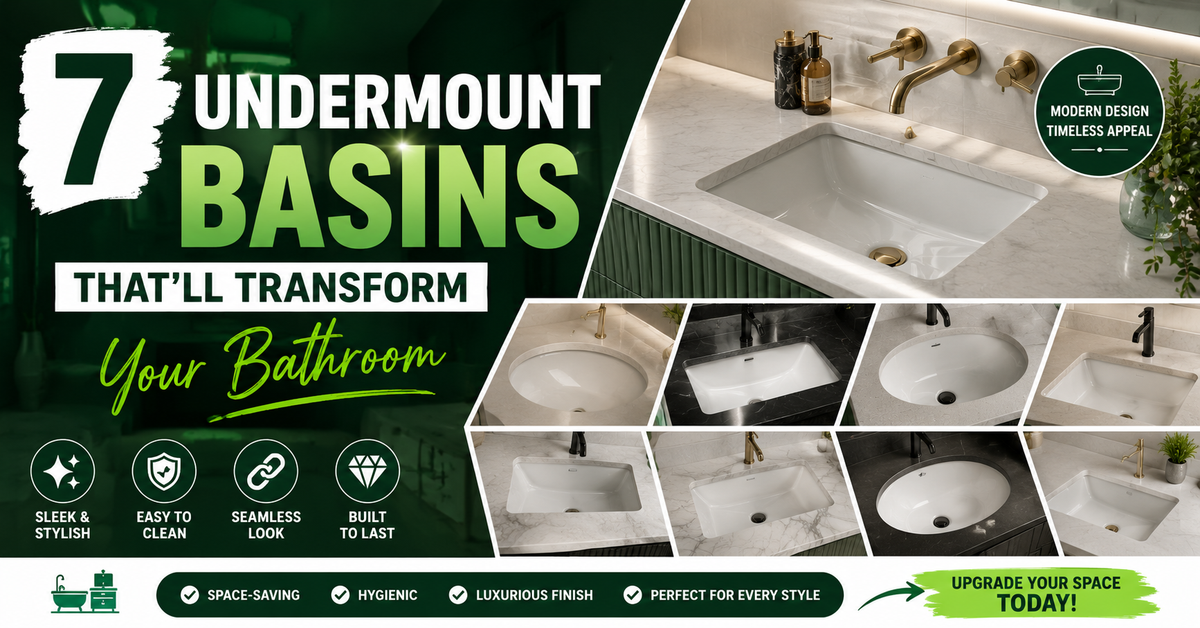
7 Undermount Basins That'll Transform Your Bathroom
1. The classic round undermount
A round bowl softens a bathroom that's otherwise full of straight lines tiled walls, a rectangular mirror, a boxy vanity. It's also the easiest shape to keep spotless because there are no corners for soap residue to sit in. This is the basin we'd point a young family toward first.
2. The rectangular undermount
If bench space is tight and you need every centimetre to earn its keep, a rectangular bowl maximises usable width without eating into your vanity's storage footprint. It pairs naturally with a long, single-length mirror and a wall-mounted tap, which is the combination you'll see most often in newer ensuite renovations.
3. The oval or pill-shaped undermount
This shape splits the difference between round and rectangular soft edges, but a longer footprint that suits a Hamptons or transitional bathroom. It works particularly well with an arched mirror or a curved tapware profile, because the basin's shape echoes the rest of the room instead of fighting it.
4. The matte black undermount
Matte black basins have moved from "bold statement" to "genuinely common choice" in the last couple of years, mostly because they hide watermarks better than gloss white and pair with almost any benchtop colour. If your vanity is otherwise neutral, a black undermount does a lot of visual heavy lifting for very little extra cost.
5. The compact undermount for powder rooms
Powder rooms and small ensuites don't need or have room for a full-size basin. A compact undermount, often 350–400mm, keeps the footprint small while still getting the seamless, easy-clean benefit. This is the basin that makes a tiny guest toilet feel intentional rather than squeezed in.
6. The twin undermount set
For double vanities, installing two matching undermount basins side by side (or with a gap between taps) creates real symmetry and avoids the morning traffic jam of a single shared bowl. It's a bigger investment upfront, but it's one of the few upgrades that genuinely changes how a household uses the room day to day.
7. The stone-look undermount
Made from ceramic or composite with a stone-effect finish, this basin gives you the marble or terrazzo look without the cost or porosity concerns of natural stone. It's a strong pick if your benchtop is already engineered stone and you want the basin to blend in rather than contrast.

How to Choose the Right One for Your Space
Matching basin shape to vanity size
As a rough rule, a compact basin suits a vanity under 600mm wide, a round or oval basin works well on 600–900mm vanities, and rectangular basins come into their own on 900mm-plus benchtops or double-basin setups. Measure your vanity depth too undermount basins need enough front-to-back clearance for the tap and your elbows.
Ceramic vs stone vs composite what actually holds up
Ceramic is the most common and most forgiving option: it's non-porous, easy to clean, and resists staining without any sealing required. Natural stone basins look incredible but need periodic sealing to stay stain-resistant. Composite and solid-surface basins sit in between durable and low-maintenance, with more colour and finish options than ceramic alone.
What it really costs once installation is factored in
The basin itself is only part of the budget. Because undermount basins bond to the benchtop from below, you're also paying for the stone fabricator to cut and polish the opening, plus a plumber for the tapware and waste connection. Get a combined quote from your benchtop supplier before you fall in love with a specific basin the installation cost can vary more than the basin price does.
Installation & Maintenance Essentials
What actually happens during installation
The basin is templated to the benchtop cut-out, bonded underneath with a structural adhesive, and clipped or bracketed for extra support depending on the basin's weight. The joint is then sealed with silicone to keep water from tracking underneath. This isn't a weekend DIY job it needs a stone fabricator and, usually, a plumber working together.
Keeping the seal watertight long-term
Check the silicone seal around the basin edge every six to twelve months. If it starts to discolour, peel, or feel soft, it's time to re-seal before water gets underneath and causes damage to the benchtop or cabinetry below. This is a five-minute check that saves a much bigger repair later.
Frequently Asked Questions
Can undermount basins go on laminate benchtops?
No. Undermount basins need a solid, non-laminate surface natural stone, engineered stone, or solid-surface composite to bond and seal properly. If your benchtop is laminate, a semi-inset or drop-in basin is the better fit.
How much do undermount basins cost in Australia?
Basin prices typically range from a few hundred dollars for ceramic options to well over a thousand for natural stone or designer composite basins. On top of that, budget for benchtop cut-out and fabrication, plus plumbing labour get these quoted together rather than separately.
Undermount vs semi-inset what's the real difference?
An undermount basin sits entirely below the benchtop line, so the stone surface is flush at the bowl's edge. A semi-inset basin sits partly above the bench, with the front of the bowl protruding it needs less benchtop depth but has a visible seam that requires more regular cleaning.