Shower Screen Buying Guide: Frameless, Semi-Frameless, or Framed
Choosing a shower screen is one of those decisions that feels simple at first, until you realize just how many options are out there. Frameless, semi-frameless, and framed screens each come with their own look, price point, and practical considerations, and picking the wrong one can affect both your bathroom's style and your day to day comfort. Whether you are renovating a small ensuite or designing a brand new family bathroom, understanding the differences between these three styles will help you make a confident choice. This guide breaks down everything you need to know so you can pick the shower screen that truly fits your space and budget.
Why Your Shower Screen Choice Matters
A shower screen does more than just keep water contained. It plays a big role in how open or enclosed your bathroom feels, how easy the space is to clean, and how much it costs to install. Since a shower screen is usually a long term fixture, getting the choice right the first time saves you from costly changes down the line.
Beyond function, the style of your screen also sets the tone for the entire bathroom. A sleek frameless design can make a small space feel larger and more modern, while a framed screen might suit a more classic or budget conscious renovation. Taking the time to understand each option ensures your final choice matches both your practical needs and your design vision.

What Is a Frameless Shower Screen
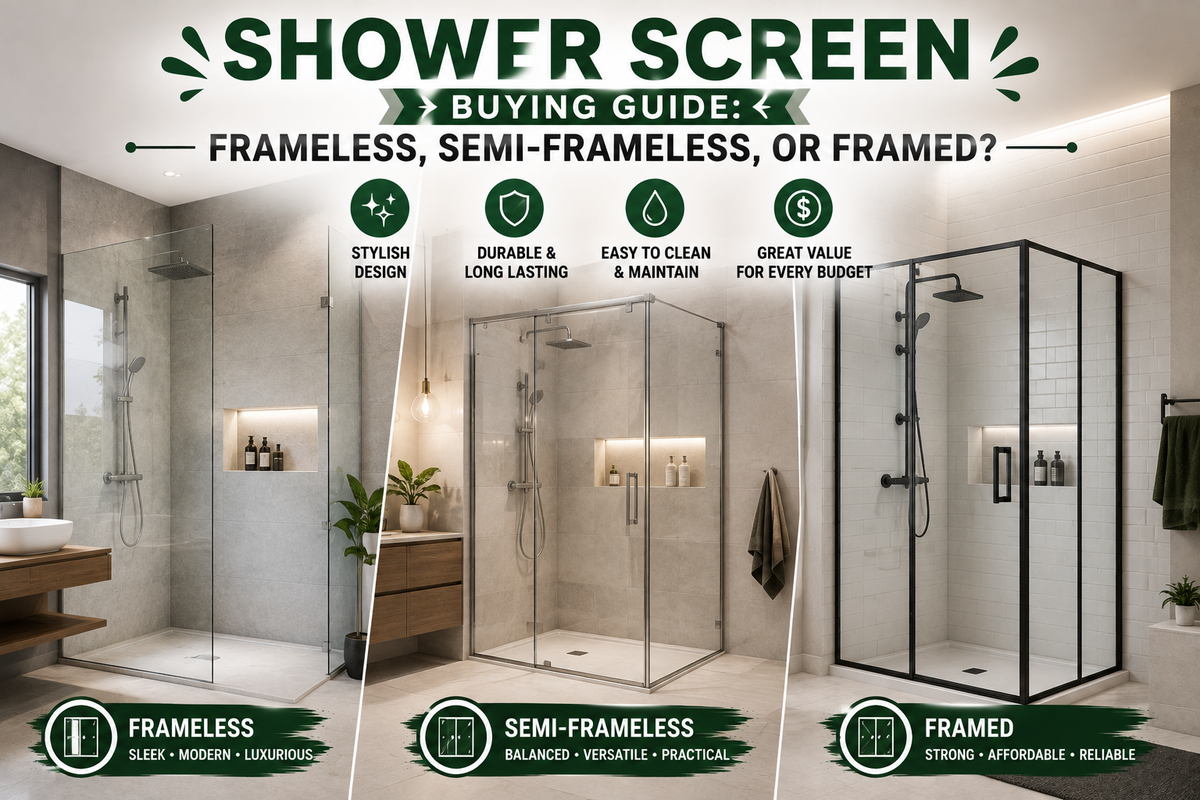
A frameless shower screen is exactly what it sounds like, a screen made entirely of thick toughened glass with no metal framing around the edges. The glass is held in place using minimal hardware, such as hinges or clips, giving the entire structure a clean, seamless appearance.
This style has become extremely popular in modern Australian bathrooms because of how open and spacious it makes a room feel. Since there is no metal frame to break up the sightline, frameless screens work particularly well in smaller bathrooms where every visual inch counts. They also tend to be easier to clean, since there are far fewer nooks and grooves where soap scum and grime can build up.
What Is a Semi-Frameless Shower Screen
A semi-frameless shower screen sits right in the middle, combining some of the sleekness of a frameless design with the added stability that a small amount of framing provides. Typically, only certain edges or the door section include a thin metal frame, while the rest of the glass remains frameless.
This option is a popular middle ground for homeowners who want a modern look without the higher price tag that often comes with a fully frameless setup. Semi-frameless screens also tend to offer slightly more structural support, which can be helpful for larger openings or custom shaped enclosures. If you are exploring different styles, our Shower Screen collection includes a range of semi-frameless designs suited to different bathroom layouts.
What Is a Framed Shower Screen
A framed shower screen uses a full metal frame around all edges of the glass, offering the most support and stability out of the three options. This style has been around the longest and remains a practical, budget friendly choice for many Australian bathrooms.
Framed screens are often the most affordable option upfront, making them a popular choice for rental properties, budget renovations, or bathrooms where cost is the primary concern. While they may not offer the same sleek, minimal look as frameless or semi-frameless designs, modern framed screens have improved significantly in style, with slimmer frames and a wider range of finishes available than in previous years.
Comparing Cost Across the Three Options
Price is often one of the biggest deciding factors when choosing a shower screen, and the differences between these three styles can be significant. Framed screens are generally the most affordable, since they use less specialized glass and simpler installation methods.
Semi-frameless screens usually sit in the mid range, offering a balance between style and cost. Frameless screens tend to be the most expensive option, mainly due to the thicker toughened glass required and the more precise installation process involved. When budgeting for your renovation, it helps to weigh the visual impact you want against how much of your budget you are willing to allocate specifically to the shower area.
Which Option Works Best for Small Bathrooms
Space is often a major factor in bathroom renovations, especially in apartments or older homes with compact layouts. Frameless shower screens tend to be the best choice for small bathrooms, since the lack of visible framing helps the space feel more open and less cluttered.
Semi-frameless screens can also work well in smaller spaces, particularly if you choose a design with minimal framing concentrated only around the door. Framed screens, while still functional, can sometimes make a small bathroom feel more boxed in due to the visible metal edges. If maximizing the sense of space is a priority, our Corner shower screen range offers compact configurations designed specifically for tighter layouts.
Which Option Suits Larger or Family Bathrooms
For larger bathrooms, all three screen types can work well, and the decision often comes down to personal style rather than spatial constraints. Framed and semi-frameless screens can offer added durability for larger openings, which is useful in family bathrooms that see frequent daily use.
If you are designing a bigger shower space and want the enclosure to feel like a true design feature, a Wall To Wall screen configuration can create a seamless, spa like enclosure that spans the full width of the shower area. This style works particularly well in larger family bathrooms where a walk in shower is part of the overall design.
Custom Shapes and Configurations
Not every bathroom follows a standard rectangular layout, and shower screens have evolved to accommodate more unique spaces. For bathrooms with an existing bathtub, a Over bath screen provides a practical solution that keeps water contained without requiring a full shower enclosure.
For those wanting a more decorative touch, a Diamond shaped screen configuration adds a unique geometric element to the bathroom, standing out as a design feature rather than just a functional fixture. Exploring these configurations early in your renovation planning helps ensure your final layout works with the space you actually have, rather than forcing a standard design into an unusual room shape.
Maintenance and Cleaning Considerations
Cleaning is a practical factor that often gets overlooked until after installation. Frameless screens are generally the easiest to maintain, since there are no metal edges or grooves for soap scum and mineral deposits to collect in.
Semi-frameless screens require slightly more attention around the framed sections, though the majority of the glass remains easy to wipe down. Framed screens tend to need the most maintenance, since water and grime can build up along the metal edges over time if not cleaned regularly. Choosing a screen with a quality glass coating, regardless of style, can also make ongoing cleaning noticeably easier across all three options.
Installation and Fixed Panel Options
Installation complexity varies between the three styles, and this can affect both cost and timeline for your renovation. Framed screens are typically the simplest and quickest to install, since the frame provides built in structural support during fitting.
For bathrooms that only need a single stationary piece of glass rather than a full enclosure, a Fixed Panel option offers a simple and effective solution. This works particularly well for open plan bathroom layouts or walk in showers that do not require a hinged door.
Making the Final Decision
Choosing between frameless, semi-frameless, and framed shower screens ultimately comes down to balancing your budget, bathroom size, and personal style preferences. If a sleek, modern look and easy maintenance are your top priorities, frameless is likely your best option, provided your budget allows for it.
If you want a similar aesthetic with a bit more cost flexibility, semi-frameless offers a strong middle ground. For those working with a tighter budget or prioritizing durability above all else, a framed screen remains a reliable and practical choice. Taking measurements of your space and considering how the screen will fit alongside your existing Vanities and other fixtures can also help ensure the final result feels cohesive throughout the bathroom.
Conclusion
Shower screens play a bigger role in your bathroom's overall feel than many people expect, affecting everything from how spacious the room feels to how easy it is to keep clean. Whether you choose frameless, semi-frameless, or framed, understanding the strengths and trade offs of each style helps you make a decision that will serve your bathroom well for years to come. Take the time to consider your space, budget, and daily routine before making your final choice, and you will end up with a shower screen that feels like the right fit in every sense.
Frequently Asked Questions
Which shower screen type is the most expensive?
Frameless shower screens are typically the most expensive option due to the thicker toughened glass and more precise installation process required.
Are frameless shower screens harder to install?
Yes, frameless screens generally require more precise measurements and professional installation compared to framed screens, which can increase both cost and installation time.
What is the easiest shower screen type to clean?
Frameless shower screens are the easiest to maintain, since there are no metal edges or grooves where soap scum and grime can accumulate.
Can I use a shower screen over an existing bathtub?
Yes, an over bath shower screen is designed specifically for this purpose, providing splash protection without the need for a full shower enclosure.
Is a semi-frameless shower screen a good middle ground option?
Yes, semi-frameless screens offer a balance between the sleek look of frameless designs and the affordability of framed options, making them a popular choice for many renovations