Are All Kitchen Mixer Taps the Same Size?
If you're replacing your kitchen tap or renovating your kitchen, you've probably wondered whether any mixer tap will simply fit where your old one was. It's a fair question, and the short answer is no, kitchen mixer taps are not all the same size. While many share a similar general setup, there are a few key measurements that can vary from one tap to another, and getting these wrong can mean a tap that doesn't fit your sink or bench at all.
In this guide, we'll break down what actually varies between kitchen mixer taps, what tends to stay fairly standard, and what to check before buying a new one.
Are All Kitchen Mixers the Same Size
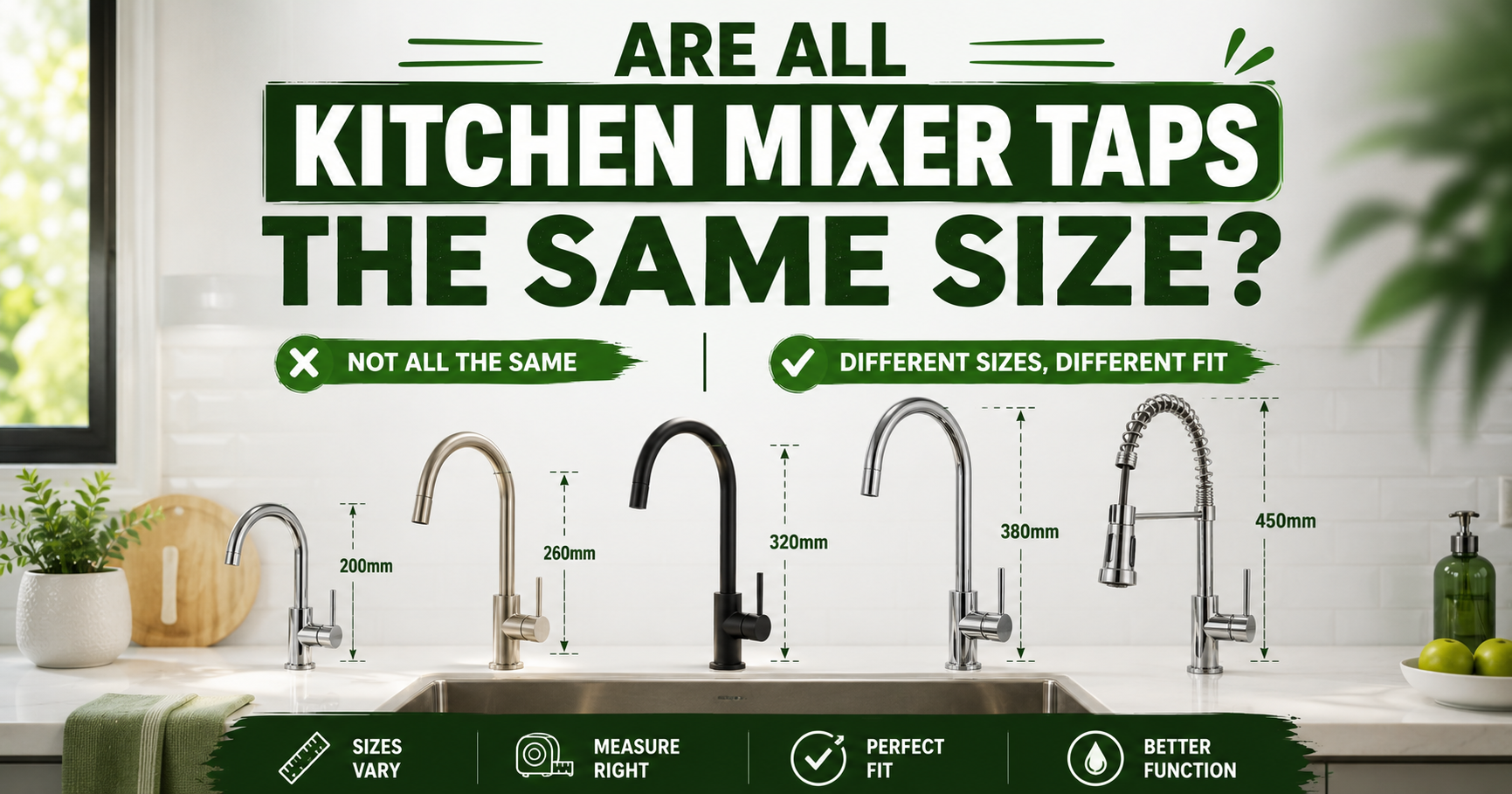
Kitchen mixer taps share some common sizing, but they are not universally the same. The main things that can differ include the size of the hole needed in your sink or benchtop, the size of the base plate that sits on top, the height and reach of the spout, and how the tap connects to your water supply. Some of these measurements are fairly consistent across most taps, while others vary quite a bit depending on the brand, style, and design of the tap.
This means that while you can often find a replacement tap that fits without major changes, it's not something to assume. A quick check of a few measurements before buying can save you a lot of hassle later.

What Actually Varies Between Kitchen Mixer Taps
There are four main areas where kitchen mixer taps can differ from one another.
1. Hole Size in the Sink or Benchtop
This is the hole that the body of the tap passes through to connect to the water supply underneath. Most kitchen mixer taps are designed to fit a hole somewhere between 30mm and 35mm in diameter, with 35mm being the most common size used across many standard kitchen sinks. However, this isn't universal, and some sinks or benchtops may have slightly different hole sizes, especially older installations or custom benchtops.
2. Base Plate Size
The base plate, sometimes called a base ring, is the part that sits on top of the sink or bench and covers the hole. This is usually larger than the hole itself, often somewhere around 40mm to 50mm, and its main job is to hide any marks or gaps left by a previous tap. Since base plates vary in size between brands, a new tap's base plate might not perfectly match the coverage of your old one, which is worth checking if you have any visible marks around your current tap.
3. Spout Height and Reach
This is one of the areas where taps can vary the most. Spout height refers to how far the spout sits above the sink, while spout reach refers to how far it extends out over the basin. A tap with a low, short spout might struggle to fit larger pots underneath, while a tall, high-arc spout gives more clearance but might not suit a shallower sink or a kitchen with low cupboards above. Because there's no single standard here, it's worth measuring your available space and comparing it to a tap's listed spout height before buying.
4. Water Connection Type
Kitchen mixer taps connect to your hot and cold water supply using flexible hoses, and most are designed to connect using a standard fitting. That said, the exact connection point and hose length can vary between models, and some may require an adaptor if you're switching from an older style of tap to a newer one, or moving from a traditional two-tap setup to a single mixer.
Standard Tap Hole Sizes Explained
Most kitchen sinks in Australia are designed with a single mounting hole somewhere between 30mm and 35mm across, with 35mm being the size most modern mixer taps are built to fit. If you're replacing an existing mixer with a similar style, there's a good chance the hole size will already suit your new tap.
However, it's still worth measuring your existing hole before buying, especially if your current tap is older or if you're switching from a different tap style. If the new tap needs a slightly larger hole, this can sometimes be adjusted with the right tools, though it's a good idea to get a plumber or cabinetmaker involved rather than attempting this yourself, particularly with stone or composite benchtops.
Also Read: What Is the Best Kitchen Sink Material for Everyday Use?
Single Hole vs Three Hole Sink Setups
Some older kitchens have a three-hole setup, with separate hot and cold taps on either side and a spout in the middle. If you're upgrading to a single mixer tap, you'll only need to use one of these holes, which means the other two will be left empty.
In this case, most people use a cover plate, sometimes called a deck plate, to neatly cover the unused holes rather than leaving them exposed. It's a simple, affordable fix that keeps the finished look clean, and it's worth factoring into your budget if you're moving from a three-hole setup to a single mixer tap.
Water Connections and Fittings
Underneath the sink, a kitchen mixer tap connects to your home's hot and cold water supply using flexible hoses. These typically link into your existing plumbing through a standard fitting, though the exact setup can vary slightly depending on your home's age and previous tap style.
If you're replacing a tap yourself, it's worth taking a photo of your current under-sink setup before removing anything, so you have a clear reference for how the hoses and fittings are arranged. In most cases involving actual plumbing changes, it's worth hiring a licensed plumber, both for safety and to make sure the work is properly certified.
WELS Ratings and Why They Matter in Australia
In Australia, kitchen tapware is required to carry a WELS rating, which measures water efficiency using a star system. This doesn't affect the physical size of the tap, but it's still worth checking when comparing models, since a higher WELS rating generally means lower water use without a noticeable drop in performance. It's a useful detail to keep in mind alongside your sizing checks, particularly if reducing water use is a priority for your household.
How to Check Sizing Before Buying a Replacement Tap
Before purchasing a new kitchen mixer tap, a few quick checks can save you time and potential frustration:
- Measure your existing hole size in the sink or benchtop, so you know what diameter your new tap needs to fit.
- Check the base plate size of the new tap against any existing marks or wear around your current tap's base.
- Compare spout height and reach to your available bench and cupboard space, especially if you regularly use tall pots or pans.
- Take a photo of the under-sink connections before removing your old tap, so you have a reference if adjustments are needed.
- Look at the WELS rating if water efficiency matters to you, alongside the physical dimensions of the tap.
Taking these steps before buying means you're far less likely to end up with a tap that doesn't fit, or one that requires unexpected extra work to install.
Conclusion
So, are all kitchen mixer taps the same size? Not quite. While hole sizes are fairly standard across most modern taps, details like base plate size, spout height, and water connections can vary between brands and models. Taking a few simple measurements before you buy is the easiest way to make sure your new tap fits properly and works well in your kitchen, without any surprise adjustments along the way.
Frequently Asked Questions
What is the standard hole size for a kitchen mixer tap?
Most kitchen mixer taps are designed to fit a hole between 30mm and 35mm in diameter, with 35mm being the most common size in modern kitchens.
Can I replace a three-hole tap setup with a single mixer tap?
Yes. You'll only need one of the existing holes for the mixer, and the other two can be covered with a deck plate for a clean finish.
Do all kitchen taps have the same spout height?
No. Spout height and reach vary quite a bit between models, so it's worth checking these measurements against your sink and cupboard space before buying.
Do I need a plumber to install a new kitchen mixer tap?
For anything involving changes to your hot and cold water connections, it's best to use a licensed plumber, both for safety reasons and to make sure the work meets local requirements.