
Towel Hooks vs Towel Rails: Which Is Better?
When it comes to finishing off a bathroom, towel storage is one of those details that's easy to overlook until you're standing there with a wet towel and nowhere to hang it. The two most common options are towel hooks and towel rails, and while they might seem like a small decision, the right choice can actually make a real difference to how your bathroom looks and functions day to day.
So, towel hooks vs towel rails, which is better? The honest answer is that it depends on your bathroom's size, how many people use it, and what you value more, drying speed or a clean, minimal look. In this guide, we'll break down the pros and cons of each option, so you can decide what actually suits your space.
Towel Hooks vs Towel Rails: Which Is Better?
If your priority is drying towels quickly and keeping things hygienic, a towel rail is generally the better option, since it allows air to circulate around the towel. If you're short on wall space or want a simpler, more minimal look, towel hooks are usually the easier and more affordable choice. Many bathrooms actually end up using a mix of both, which we'll get into further down.
What's the Difference Between a Towel Hook and a Towel Rail?
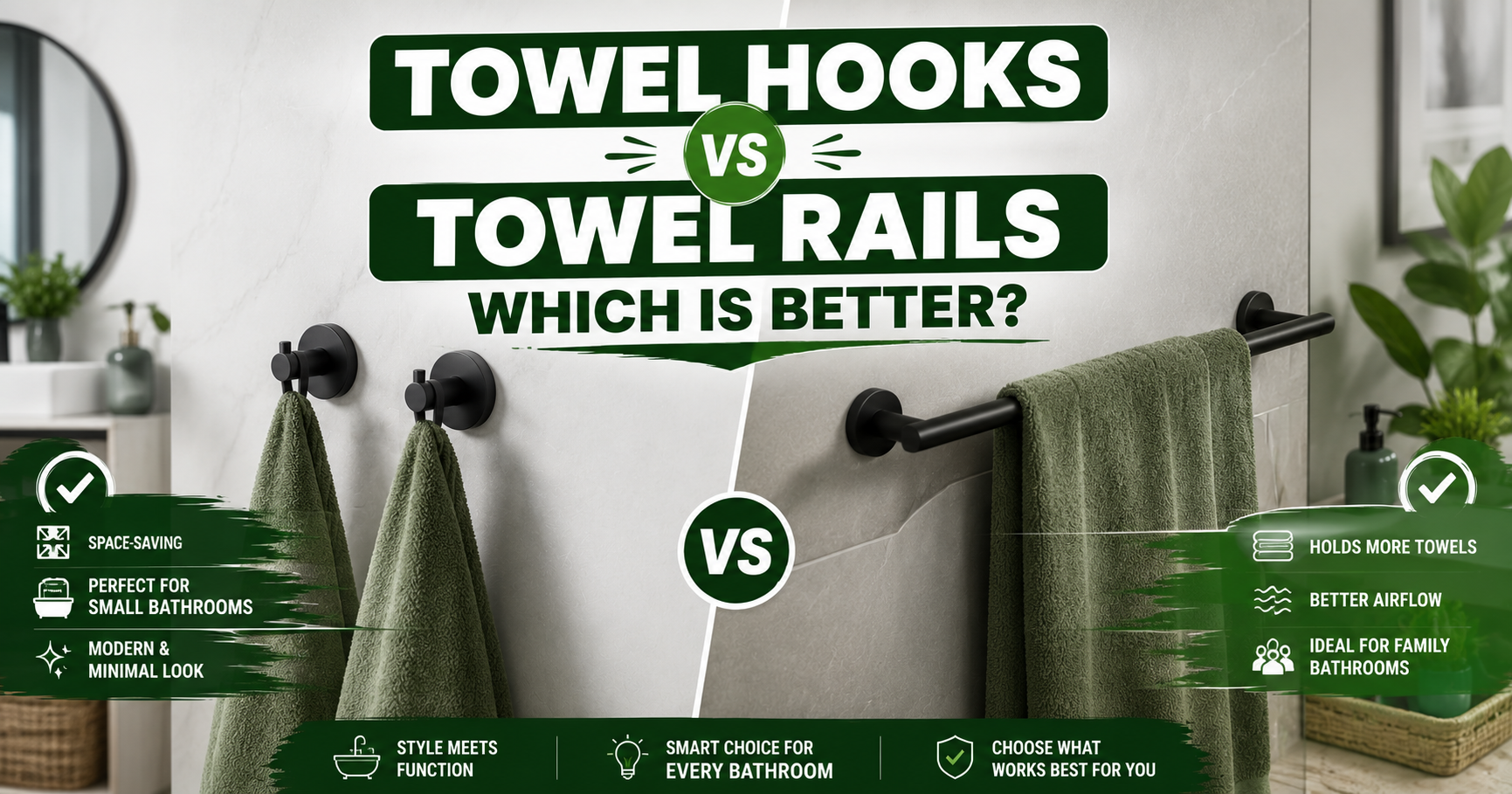
A towel hook is exactly what it sounds like: a small fixture mounted to the wall that a towel hangs from, usually folded over the hook or hung by a loop. A towel rail, on the other hand, is a horizontal bar mounted to the wall that a towel is draped over, allowing it to hang flat with more of its surface exposed to the air.
The core difference comes down to how the towel sits once it's hung. A hooked towel bunches up in one spot, while a towel over a rail spreads out, which affects how quickly it dries and how much space it needs on the wall.
The Case for Towel Hooks
Towel hooks have become increasingly popular, especially in smaller bathrooms or ensuites, and for good reason.
Pros of Towel Hooks
- Space-saving. Hooks take up very little wall space, which makes them ideal for compact bathrooms, ensuites, or anywhere you're short on room.
- Affordable. Hooks are generally cheaper than towel rails, both to buy and to install.
- Simple installation. Most hooks can be mounted with minimal drilling, and some adhesive options don't require any drilling at all.
- Great for multiple towels. A row of hooks lets each family member have their own designated spot, which can help keep things organised.
- Works well in tight corners. Hooks can be mounted almost anywhere, including behind doors or in awkward corners where a rail wouldn't fit.

Cons of Towel Hooks
- Slower drying. Since the towel bunches up on a hook, less of its surface is exposed to air, which means it takes longer to dry and can start to smell musty if left too long.
- Less tidy appearance. A hook with a bunched-up towel can look messier than a neatly folded towel over a rail.
- Limited towel size. Larger bath towels can feel heavy and awkward hanging from a single hook point.
The Case for Towel Rails
Towel rails have long been the standard in most bathrooms, and they remain a solid choice for a reason.
Pros of Towel Rails
- Better drying. Because the towel hangs flat and open, more of it is exposed to air, which helps it dry faster and stay fresher for longer.
- Neater look. A towel draped evenly over a rail generally looks tidier than one bunched on a hook.
- Suits larger towels well. Bath towels and larger sizes hang more comfortably and evenly across a rail.
-
Heated options available. Heated towel rails add an extra layer of comfort, especially in cooler months, and further speed up drying time.

Cons of Towel Rails
- Takes up more wall space. A rail needs a decent stretch of open wall, which can be tricky in a small bathroom or ensuite.
- Higher cost. Rails, especially heated ones, tend to cost more upfront than hooks, and heated versions add to running costs too.
- Fewer spots per person. A single rail may only comfortably fit one or two towels, which isn't always practical for a busy household.
Which One Suits Your Bathroom Better?
The right choice really comes down to a few practical factors.
Bathroom Size
In a small bathroom or ensuite, wall space is often limited, and hooks make far better use of what little space is available. In a larger family bathroom, a rail or two, combined with a few hooks for robes or hand towels, tends to work better overall.
Number of Users
If multiple people share the bathroom, hooks can be a practical way to give everyone their own spot without needing several rails mounted side by side. This is especially useful in family bathrooms where towel mix-ups are common.
Drying Needs
If damp towels are an ongoing issue, particularly in bathrooms without much airflow or natural light, a rail will generally do a better job of drying towels properly between uses. This also helps reduce musty smells and the need for more frequent washing.
Style and Look
Hooks tend to suit more minimal, modern bathroom designs, while rails offer a slightly more traditional, hotel-style finish. Neither is more "correct" than the other, it really comes down to the overall look you're going for.
Can You Use Both?
Yes, and in many bathrooms this is actually the best solution. A common approach is to install a towel rail for the main bath towel, where drying matters most, and add a few hooks nearby for robes, hand towels, or extra towels when guests are staying. This combination gives you the drying benefits of a rail along with the flexibility and space-saving nature of hooks.
Installation Considerations
Before deciding, it's worth thinking about a few practical points:
- Wall type. Hooks are generally easier to install on most wall types, including tiled walls, since they often need smaller fixing points than a full rail.
- Weight capacity. If you're hanging heavier bathrobes or multiple towels, check that your hooks or rail are rated to handle the weight without pulling away from the wall.
- Placement near water. Keep hooks and rails within easy reach of the shower or bath, but not so close that towels get splashed while still on the wall.
- Matching finishes. If you're installing both hooks and a rail, try to match the finish, such as matte black, chrome, or brushed nickel, for a consistent look throughout the bathroom.
Conclusion
There's no single right answer when it comes to towel hooks vs towel rails. Hooks are the better pick for small spaces, tight budgets, and simple installation, while rails offer better drying and a neater overall look, especially for larger bathrooms or heavier towel use. For a lot of bathrooms, using a combination of both ends up being the most practical solution, giving you fast drying where it matters most and flexible storage everywhere else.
Frequently Asked Questions
Are towel rails better than hooks for drying towels?
Yes, generally. A towel rail allows more of the towel's surface to be exposed to air, which helps it dry faster than a towel bunched on a hook.
Are towel hooks a good option for small bathrooms?
Yes. Hooks take up very little wall space, which makes them a practical choice for small bathrooms, ensuites, or tight corners where a rail wouldn't fit.
Can I use both towel hooks and a towel rail in the same bathroom?
Absolutely. Many bathrooms use a rail for the main towel and hooks for robes, hand towels, or extra guest towels, giving the best of both options.
Do heated towel rails cost a lot to run?
Running costs vary depending on the model and how often it's used, but many heated towel rails are designed to be energy-efficient for everyday use.