How to Choose the Right Basin for Your Vanity
Picking a new basin can feel harder than it should be, especially with so many shapes, sizes, and installation types on the market. Knowing how to choose the right basin for your vanity makes the whole process much easier and helps you avoid a mismatch once everything is installed. The basin plays a big role in how your bathroom looks and functions every day, so it is worth taking the time to get it right. In this guide, we will walk you through the key things to think about, from size and shape to material and installation, so you can choose a basin that suits both your vanity and your daily routine.
Why the Basin and Vanity Need to Work Together
Your basin and vanity are not separate decisions. They need to work as a pair, both in terms of measurements and overall style. A basin that is too large can overhang the edges of your vanity top, while one that is too small can look lost and out of proportion.
Beyond looks, the wrong pairing can also cause practical problems. Splashing water outside the basin, awkward tap placement, or limited counter space around the bowl are common issues when a basin has not been matched properly to its vanity. Taking a little extra time here saves you from a frustrating daily experience later on.
If you are still deciding on your overall vanity setup, our guide on maximising storage space with vanity units is a helpful place to start before you move on to basin shopping.

Consider the Size of Your Bathroom First
Before looking at basin styles, think about the space you are working with. A small bathroom or powder room usually calls for a compact basin that leaves enough bench space for everyday items like soap and toothbrushes. A larger bathroom gives you more freedom to choose a statement basin without worrying about the room feeling cramped.
Measure your vanity top carefully, including the depth from the wall to the front edge. This helps you avoid choosing a basin that is too deep for the space, which can make it difficult to stand comfortably at the sink. If your bathroom is already on the smaller side, it is worth reading our tips on how to make a small bathroom look bigger, since basin choice plays a part in that too.
Understand the Different Basin Types
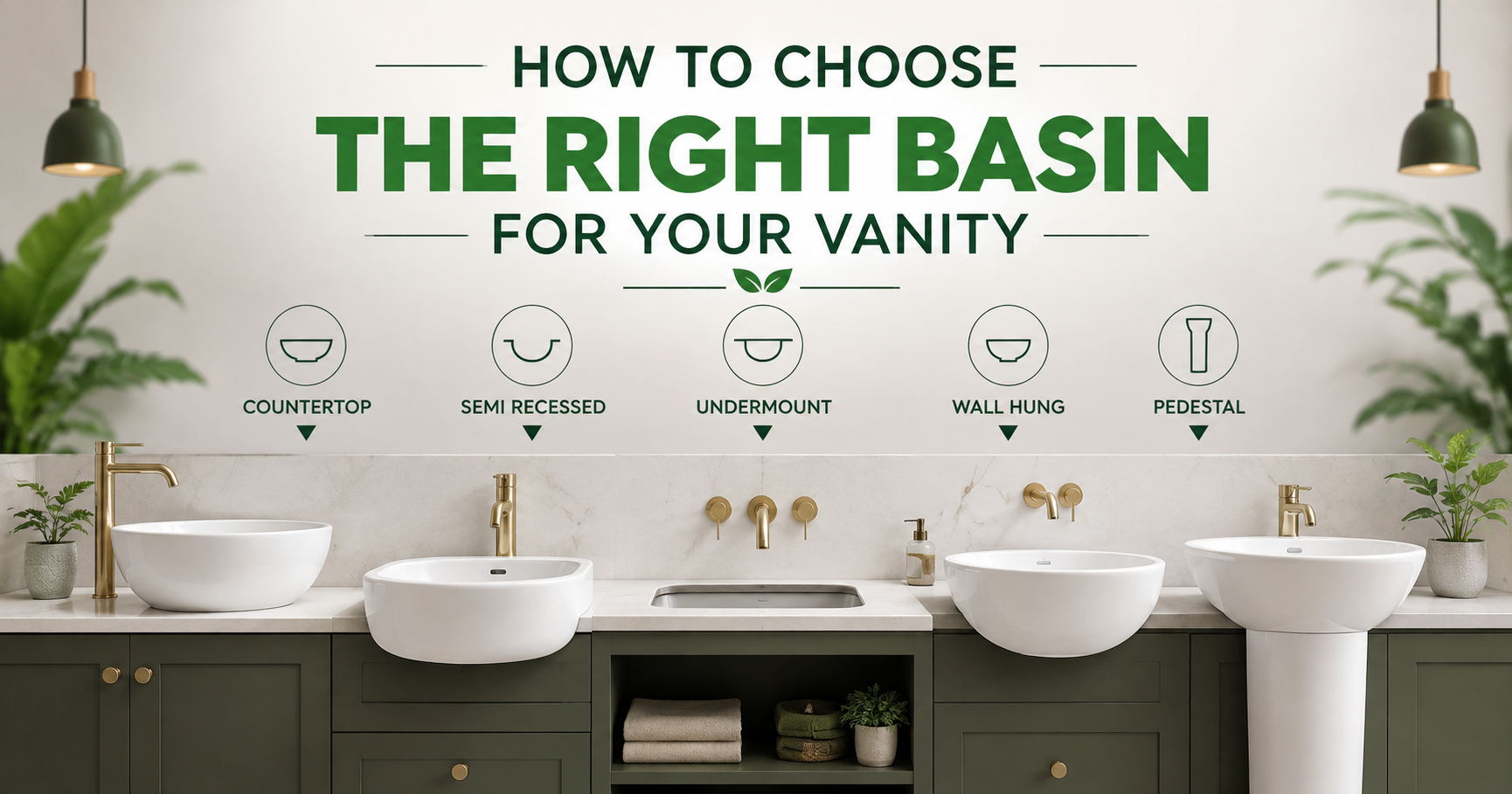
There are a few common basin installation types, and each one changes the look and feel of your vanity.
Top mount basins, sometimes called drop in basins, sit on top of the vanity with the rim visible. They are simple to install and widely available, making them a practical choice for most homes.
Undermount basins are fitted beneath the vanity top, creating a smooth, seamless surface. This style is easier to wipe clean since there is no rim to catch water or dirt, though it usually costs a little more due to the extra installation work.
Semi recessed basins sit partly on top of the vanity and partly built in, which is a great option if you want extra bench space while still keeping a modern look.
Vessel basins sit completely on top of the vanity, almost like a bowl. They create a bold, eye-catching feature but do require slightly taller tapware to work properly, so keep that in mind when planning your setup.

Think About Shape and Style
Basin shape has a big impact on the overall feel of your bathroom. Round basins tend to suit softer, more traditional bathroom designs, while square or rectangular basins fit well in modern, minimalist spaces.
Oval basins sit somewhere in between and work with almost any style, which makes them a safe choice if you are unsure. If your bathroom already has strong angular lines, such as a square vanity or geometric tiles, a rounded basin can help soften the space. On the other hand, if your bathroom leans more contemporary, straight edged basins usually complete the look better.
It also helps to think about your tapware at this stage. A well chosen tap style can either highlight or clash with your basin shape, so it is worth planning both together rather than choosing them separately.
Choose a Material That Suits Your Lifestyle
Basins come in a range of materials, and each one has its own benefits.
Ceramic is the most common choice thanks to its durability, easy cleaning, and affordable price point. It suits almost any bathroom style and holds up well over time.
Stone resin basins offer a more modern, textured look and are known for being lightweight yet strong. They are a popular choice for homeowners wanting something a little different from standard ceramic.
Glass basins can make a real style statement, particularly as a vessel basin, though they do show water marks more easily and need more regular cleaning to stay looking their best.
Stainless steel basins are extremely durable and resistant to chips or cracks, making them a solid option for busy family bathrooms, though they are less common in residential settings compared to ceramic or stone resin.

Do Not Forget the Practical Details
A few small details can make a big difference to how happy you are with your basin day to day.
Check the tap hole configuration before buying, since basins are usually designed for either a single hole, three holes, or no pre drilled holes at all, depending on your chosen tapware. Getting this wrong can mean returning or reordering, which is an easy mistake to avoid with a quick check beforehand.
Overflow holes are another detail worth considering. These small holes near the top of the basin help prevent water from spilling over the edge if a tap is left running, which is a handy safety feature for family bathrooms.
Finally, always confirm your basin waste matches the basin you have chosen, since different basin types often require different waste fittings for a proper fit and finish.
A Few Final Style Tips
Once you have the practical details sorted, have a little fun with the finishing touches. Basins are a great opportunity to introduce colour or texture into a bathroom that might otherwise be quite neutral. A coloured basin against a simple timber vanity can become a real focal point, while a plain white basin keeps things timeless if you like to update your decor often.
Try to view your basin choice alongside your mirror and lighting as well, since these elements sit close together and should feel cohesive as a group.
Conclusion
Learning how to choose the right basin for your vanity comes down to balancing practical needs with personal style. Start with your bathroom size, decide on an installation type that suits your space, then choose a shape and material that fits both your taste and your daily routine. Taking the time to plan these details together, rather than choosing your basin in isolation, will help you end up with a bathroom that looks great and works well for years to come.
Ready to find the perfect basin for your vanity? Browse our full range of bathroom basins and vanities at Living and Bathroom, or get in touch with our team for advice tailored to your space.
Frequently Asked Questions
What size basin do I need for my vanity?
Measure your vanity top width and depth first, then choose a basin that leaves at least a few centimetres of clearance on each side. This keeps the proportions balanced and gives you room for everyday items.
Is an undermount or top mount basin better?
It depends on your priorities. Undermount basins are easier to clean and give a seamless look, while top mount basins are simpler and more affordable to install. Both are reliable choices.
Do vessel basins need special tapware?
Yes. Vessel basins sit higher than other basin types, so they usually need taller tapware to reach comfortably over the rim.
What is the most durable basin material?
Ceramic and stainless steel are both known for their durability. Ceramic is the more common choice for most Australian bathrooms due to its affordability and easy maintenance.
Can I fit any basin on any vanity?
Not always. The vanity top needs to match the basin's installation type, whether that is a cut out for undermount, a flat surface for top mount, or a semi recessed opening, so it is worth confirming compatibility before you buy.
Should my basin and tapware be chosen together?
Yes. Choosing them together helps you avoid mismatched tap hole configurations and ensures the overall style feels consistent.