
How to Clean a Kitchen Sink
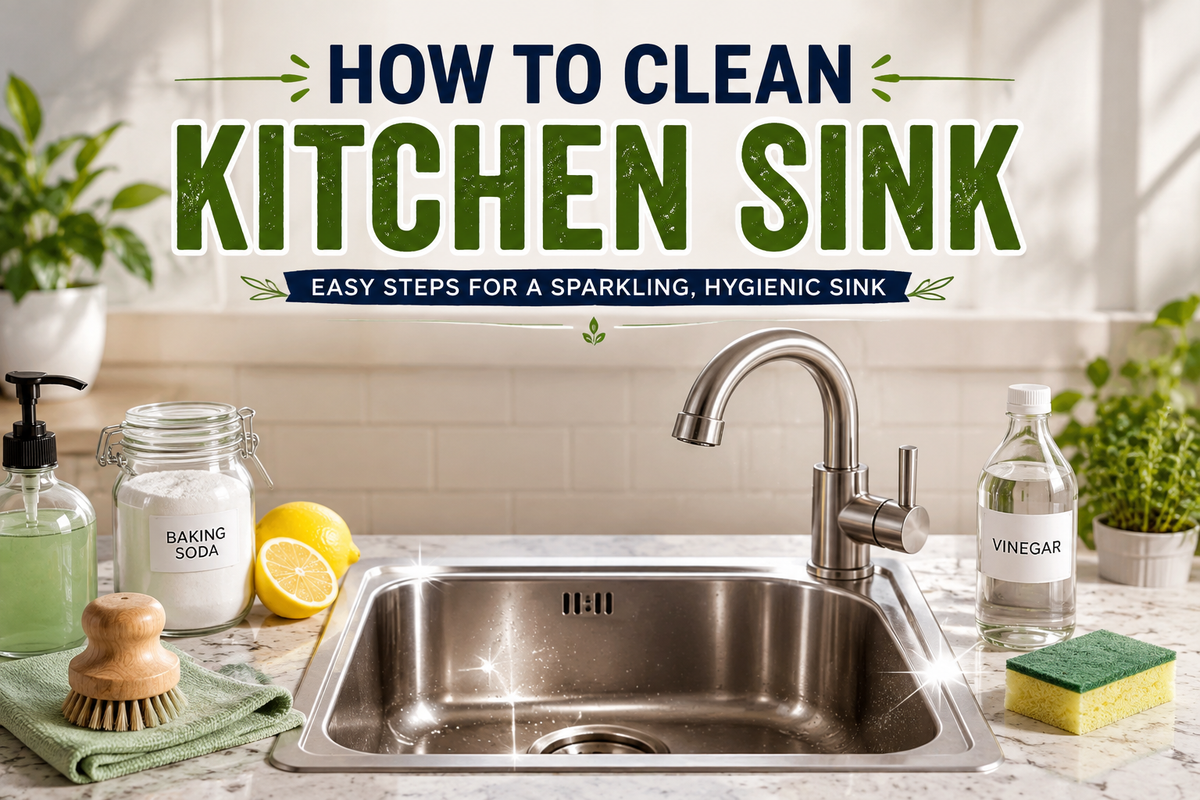
To clean a kitchen sink, empty the basin, rinse it with warm water, wash it with dish soap and a soft sponge, scrub stubborn spots gently, rinse thoroughly and dry with a microfibre cloth. The right cleaner matters as much as the method, because stainless steel, black granite, porcelain and coloured finishes all need slightly different care.
Your sink handles food scraps, grease, soap residue and hard water every day. This guide covers the basic steps, how to clean each sink material, how to remove stains and smells, and how to look after your drain and taps.
Why Should You Clean Your Kitchen Sink Regularly?
A sink collects food residue, grease and moisture daily, which is what causes most sink problems:
- Bad smells: food particles and grease around the drain break down and smell.
- Stains and dullness: tea, coffee and sauces can mark surfaces if left to dry.
- Water spots and limescale: minerals in water leave white marks, especially on dark sinks and taps.
- Surface damage: leftover residue and the wrong cleaning habits can shorten the life of the finish.
- Hygiene: a sink that handles raw meat and vegetables should be cleaned and sanitised regularly.
Regular cleaning takes minutes. Neglected sinks take real scrubbing, and scrubbing is what damages them.
What You Need to Clean a Kitchen Sink
- Dish soap
- Warm water
- Soft sponge or non-scratch cloth
- Microfibre cloths (one for cleaning, one for drying)
- Bicarb soda (bicarbonate of soda, also called baking soda)
- Soft brush or old toothbrush
- White vinegar (for certain materials only, see the chart below)
- Rubber gloves
- A sink-safe disinfectant, if you need to sanitise
Avoid: steel wool, wire brushes, scouring powders and harsh abrasive creams. These scratch most sinks, and steel wool can leave particles behind that rust.

How to Clean a Kitchen Sink in 9 Easy Steps
These steps work for most sinks. Adjust them for your material using the sections further down.
1. Remove Dishes and Food Debris
Clear the basin completely. Lift out the strainer basket and throw away loose food scraps, including anything stuck around the plughole.
2. Rinse With Warm Water
Warm water loosens food residue and light grease so you don't have to scrub as hard.
3. Apply Dish Soap
Squeeze a little dish soap onto a soft sponge and wash the whole sink: base, sides and around the drain. Dish soap cuts through grease without being harsh.
4. Treat Stubborn Spots With Bicarb Soda
Sprinkle bicarb soda on stained or stuck-on areas and add a little water to make a loose paste. Let it sit for a few minutes. Skip this step on PVD-coated or special-finish sinks .
5. Scrub Gently
Use light pressure with a soft sponge or cloth. On brushed stainless steel, always scrub in the direction of the grain, the fine lines you can see in the metal. Scrubbing against the grain can leave visible scratches and streaks.
6. Clean Around the Tap and Edges
Use a soft brush or old toothbrush around the tap base, handles, sink rim, corners and seams. Grime builds up here first.
7. Clean the Drain
Wipe the plughole and strainer with soapy water and a brush. The full drain method is further down.
8. Rinse Thoroughly
Rinse away all soap, bicarb and loosened grime. Leftover residue leaves cloudy marks as it dries.
9. Dry and Polish
Dry the sink with a clean microfibre cloth. This one step prevents most water spots and limescale marks, especially on stainless steel and dark sinks.
Which Cleaner Is Safe for Your Sink?
| Sink material | Dish soap | Bicarb soda | Diluted vinegar | Bleach | Steel wool / abrasives |
|---|---|---|---|---|---|
| Stainless steel | Yes | Yes (gently, with the grain) | Yes, briefly, then rinse | Avoid or rinse immediately | No |
| PVD coated (gunmetal, gold, brushed brass) | Yes | Avoid scrubbing | Avoid | No | No |
| Granite / quartz composite | Yes | Gently | Check manufacturer | No | No |
| Porcelain / fireclay | Yes | Gently | Occasionally | Check manufacturer | No |
| Copper | Yes | Check manufacturer | No | No | No |
If a cleaner isn't listed as safe for your material, test it on a small, hidden area first or leave it out.
How to Clean Different Types of Kitchen Sinks
How to Clean a Stainless Steel Kitchen Sink
Stainless steel is tough, but it shows water spots and fine scratches.
- Wipe away crumbs and residue with a damp cloth, following the grain.
- Wash with warm water and a small amount of dish soap.
- For stubborn marks, use bicarb paste with a soft cloth, again with the grain.
- Rinse well and dry completely.
Don't leave steel wool pads, cast iron pans or metal cans sitting wet in the sink. They cause rust-like marks.
How to Clean a Black, Gunmetal, Gold or Brushed Brass Sink (PVD and Coloured Finishes)
Coloured stainless steel sinks, such as the gunmetal stainless steel kitchen sink in our range, have a thin decorative coating. It looks great, but it needs a gentler routine.
- Use only warm water, mild dish soap and a soft cloth.
- Avoid abrasive powders, scouring pads, bleach and acidic cleaners.
- Rinse well and dry after use to keep the finish even.
When in doubt, follow the manufacturer's care guide for that specific finish.

How to Clean a Granite or Quartz Composite Sink
Composite sinks are durable and hide wear well, but harsh chemicals can damage the surface.
- Clean with warm water and mild dish soap.
- Use a soft sponge and avoid scouring pads.
- On dark sinks, white marks are usually limescale. Wipe dry after use and follow the manufacturer's advice for descaling. Don't assume stainless steel methods are safe here.
How to Clean a Porcelain, Ceramic or Fireclay Sink
These glossy surfaces clean easily but can be scratched or chipped by rough scrubbing.
- Wash with warm, soapy water and a soft cloth.
- Use a bicarb paste gently for stained areas.
- For small rust-coloured marks, some manufacturers suggest salt and lemon applied gently. Test a small area first and rinse well.
- Dry with a soft cloth to prevent water spots.
How to Clean a Copper Kitchen Sink
Copper is beautiful but sensitive. Clean it with soap, warm water and a soft, non-abrasive cloth, rinse well and dry. Pay attention to the rim, where food can get trapped and affect the finish. Avoid harsh cleaners, and clean copper sinks more often than other types.

How to Remove Common Kitchen Sink Stains
How to Remove Hard Water Stains and Limescale
Hard water leaves chalky white deposits that show up on dark sinks and chrome or black taps. Some cities, such as Adelaide and Perth, tend to have harder water than Sydney or Melbourne, but it varies by suburb.
- Prevent it: dry the sink and tap after use.
- Remove it on stainless steel: apply diluted white vinegar with a soft cloth for a few minutes, rinse well and dry.
- Other materials: use only the descaling method recommended by your manufacturer.
How to Remove Grease
Warm water and dish soap handle most grease. Wash the basin walls, tap base and drain area, then rinse well.
How to Remove Food Stains
Tea, coffee and sauce marks usually lift with soap and water. For stubborn marks on suitable materials, leave a bicarb paste on for a few minutes, scrub gently and rinse.
How to Remove Rust-Like Marks
Stainless steel doesn't usually rust on its own. Orange marks normally come from something sitting in the sink, such as cast iron pans, steel wool, metal cans or cutlery left wet. Remove the source, then clean gently. Use a cleaner made for your sink material if marks remain.
How to Remove Heat Marks and Fine Scratches (Stainless Steel)
Hot pans can leave rainbow-coloured heat tint on stainless steel. A cloth with diluted vinegar can lighten it, followed by a rinse and dry. Fine scratches are normal on brushed stainless sinks over time and usually blend into the finish. Follow the grain when cleaning and avoid abrasive pads to keep them to a minimum.
How to Sanitise a Kitchen Sink Safely
Cleaning removes grime and sanitising reduces germs. This matters if you prepare raw meat, fish or poultry near the sink.
- Clean first. Disinfectants work better on a clean surface.
- Use a suitable disinfectant. Choose one that is safe for your sink material and follow the label for contact time.
- Rinse thoroughly and dry.
Safety warning: Never mix bleach with vinegar, ammonia or other cleaners. It can release toxic fumes. Use one product at a time and rinse the sink between products.
Also replace or sanitise sponges and brushes regularly. A dirty sponge can spread germs straight back onto a clean sink.
How to Clean a Kitchen Sink Drain, Strainer and Overflow
Most sink smells come from the drain, not the basin.
- Remove the strainer and clear food debris. Throw it out, don't rinse it down the drain.
- Scrub the strainer and plughole with warm soapy water and a small brush.
- Clean the overflow (if your sink has one) with a toothbrush or bottle brush and soapy water.
- Flush with very hot tap water. Avoid pouring boiling water down the drain, as some pipes and fittings can be damaged by it.
- Optional freshener: pour in a little bicarb soda, then white vinegar, let it fizz for 10–15 minutes and flush with hot water. This helps with mild odours but won't clear a real blockage.
To keep drains healthy, keep grease, oil, coffee grounds and food scraps out of the sink and use a sink waste and strainer to catch debris. Browse our kitchen accessories for strainers and sink protection.
Why Does My Kitchen Sink Smell?
| Likely cause | What to try |
|---|---|
| Food trapped in strainer or plughole | Remove and scrub the strainer, then flush with hot water |
| Grease or biofilm in the drain | Brush the drain opening, flush with hot water, repeat weekly |
| Dirty overflow | Clean it with a small brush and soapy water |
| Smelly sponge or dishcloth | Replace or sanitise it |
| Dishwasher hose or filter | Clean the dishwasher filter and check the hose |
| Persistent sewage-like smell or gurgling | Call a licensed plumber |
If the sink drains slowly or the smell keeps returning, the problem may be deeper in the pipework, and a plumber is the safe option.
How to Clean Your Kitchen Tap and Faucet
Tap grime and limescale are the most visible signs of a neglected sink. Wipe the tap, handle and base regularly with warm water and mild soap, then dry with a soft cloth. Finishes differ:
- Chrome: soap and water, then dry to avoid water spots.
- Matte black: soft cloth only, with no abrasive or harsh cleaners.
- Brushed brass, gold, copper or gunmetal: mild soap, water and a soft cloth. Avoid acids and abrasives.
- Brushed nickel: mild soap and water, dried well.
If you have a pull-out kitchen mixer, check and wipe the spray head regularly. You can browse all kitchen tapware, including finishes like matte black, brushed brass, gunmetal and brushed nickel. Always check the tap manufacturer's care guide.
How Often Should You Clean Your Kitchen Sink?
| Task | How often |
|---|---|
| Quick rinse | After each use |
| Wipe and dry the basin and tap | Daily |
| Soap and water clean | Several times a week or as needed |
| Deeper clean (stains, tap base, drain) | Weekly |
| Sanitise | After raw meat or fish, or weekly |
| Overflow and strainer deep clean | Monthly |
Households that cook often or handle raw meat may need to clean more frequently. Copper sinks benefit from daily cleaning.
Common Kitchen Sink Cleaning Mistakes to Avoid
- Using steel wool or scourers: they scratch surfaces and can leave rust-causing particles.
- Scrubbing against the grain: this creates visible scratches on brushed stainless steel.
- Using one cleaner on every sink: coloured, composite and copper sinks need gentler care.
- Mixing cleaning chemicals: especially bleach with vinegar or ammonia.
- Leaving the sink wet: this causes water spots and limescale.
- Leaving metal items in the basin: cast iron pans and cans cause rust marks.
- Pouring grease down the drain: it hardens and blocks pipes.
- Ignoring warranty instructions: harsh products may void your coverage.
How to Keep Your Kitchen Sink Clean for Longer
- Rinse food particles away straight after washing up.
- Wipe the basin and dry the tap after each use.
- Empty the strainer daily.
- Don't leave dirty dishes soaking for hours.
- Use a sink protection grid or mat if you have a sensitive finish.
- Do a weekly 10-minute clean, so stains never get a chance to set.
Which Kitchen Sink Is the Easiest to Clean?
If you're renovating, the sink you choose changes how much effort cleaning takes.
- Stainless steel is hardwearing, resists stains and is simple to wipe down. Dry it regularly to avoid water spots.
- Granite or quartz composite has a uniform, hardwearing surface, but needs gentle cleaners and a dry-off routine to avoid limescale marks.
- Coloured stainless steel (gunmetal, gold, brass) looks striking and is easy to clean with soft cloths, but avoid abrasives.
Layout matters too. A single bowl sink is easy to reach into every corner, a double bowl sink gives you a separate side for washing and rinsing, and a drainer board sink helps dishes dry beside the basin. Browse our full range of kitchen sinks to compare sizes and finishes.

Conclusion
A clean kitchen sink comes down to a few habits: rinse and dry after use, use the right cleaner for your material, avoid abrasive tools, keep the drain clear and do a deeper clean weekly. These habits keep your sink hygienic and protect its finish for years.
Planning a kitchen upgrade? Explore our kitchen range for accessories that are built to last and easy to keep clean.
Frequently Asked Questions
What is the best way to clean a kitchen sink?
Rinse, wash with dish soap and a soft sponge, scrub stubborn areas gently, rinse thoroughly and dry with a microfibre cloth. Match your cleaner to your sink material.
Can I clean my kitchen sink with bicarb soda?
Yes, on most stainless steel, porcelain and some composite sinks. Use it as a gentle paste and scrub softly. Avoid scrubbing PVD-coated and special-finish sinks with it, and check your manufacturer's instructions.
How do I clean a stainless steel sink without scratching it?
Use a soft sponge or microfibre cloth and always follow the grain. Avoid steel wool and scouring powders.
How do I remove hard water stains from my kitchen sink?
Dry the sink after use to prevent them. For existing marks on stainless steel, use diluted white vinegar briefly, then rinse and dry. For other materials, follow the manufacturer's descaling advice.
How do I get rid of a bad smell in my kitchen sink?
Clean the drain, strainer and overflow, flush with hot water, and replace smelly sponges. If the smell persists, call a plumber.
Can I use vinegar on my kitchen sink?
It depends on the material. Diluted vinegar is generally fine for stainless steel if rinsed off promptly, but avoid it on PVD-coated, copper and some composite sinks. Never mix it with bleach.
How can I make my stainless steel sink shine?
Clean it, rinse it well and dry it completely with a microfibre cloth. Drying is what restores the shine.
How often should I deep clean my kitchen sink?
Weekly for most households, and more often if you handle raw meat or cook frequently.
Does cleaning the wrong way void my sink warranty?
It can. Harsh cleaners and abrasive tools may damage the finish and affect coverage, so check your warranty and care guide.