Wall Mixer Vs Diverter: What’s the Difference?
When designing or renovating a bathroom, many homeowners struggle to choose between a wall mixer and a diverter. Understanding the difference between these two fittings is important because both affect water flow, shower functionality, installation style, and overall bathroom design. In this wall mixer vs diverter guide, you’ll learn how each fitting works, their advantages, and which option is better suited for your bathroom needs. While wall mixers are known for their simplicity and affordability, diverters offer a more modern and versatile shower experience. Choosing the right fitting depends on factors such as budget, bathroom size, water pressure, and design preference.
What Is a Wall Mixer?
A wall mixer is one of the most commonly used bathroom fittings in traditional and modern bathrooms. It is designed to combine hot and cold water through a single unit while controlling water flow efficiently. In many homes, wall mixers are preferred because they are simple to use, affordable, and compatible with basic shower setups.
Understanding how a wall mixer works is important when comparing wall mixer vs diverter options for your bathroom.

How a Wall Mixer Works
A wall mixer connects both hot and cold water supply lines into one fitting mounted on the wall. It typically includes two handles or knobs that allow users to adjust water temperature and pressure manually.
Most wall mixers also include an outlet for attaching a hand shower or overhead shower connection. The mixer blends hot and cold water before directing it through the selected outlet.
This straightforward functionality makes wall mixers a practical choice for many households.
Main Features of a Wall Mixer
Wall mixers come with several useful features that make them popular in residential bathrooms:
- Dual controls for hot and cold water
- Compatibility with shower attachments
- Surface-mounted installation
- Simple operation and maintenance
- Cost-effective design
Because of their practical setup, wall mixers are widely used in both small and medium-sized bathrooms.
Common Uses of Wall Mixers
Wall mixers are commonly installed in:
- Standard bathroom shower areas
- Bathtubs
- Guest bathrooms
- Compact bathroom spaces
Their easy installation and budget-friendly nature make them ideal for homeowners looking for a functional bathroom fitting without complex plumbing requirements.
What Is a Diverter?
A diverter is a modern bathroom fitting designed to redirect water flow between multiple outlets, such as overhead showers, hand showers, body jets, or bathtub spouts. Unlike a standard wall mixer, a diverter focuses more on controlling the direction of water rather than simply mixing hot and cold supplies.
When discussing wall mixer vs diverter systems, diverters are generally considered more advanced and suitable for luxury or modern bathroom designs.

How a Diverter Works
A diverter valve controls where the water flows within the shower system. It allows users to switch water between different outlets using a knob, lever, or push-button mechanism.
For example, a diverter can redirect water from a hand shower to an overhead rain shower instantly without changing the water source itself.
Most diverters work alongside concealed plumbing systems that remain hidden behind the bathroom wall, creating a cleaner and more modern appearance.
Main Features of a Diverter
Diverters offer several advanced features that improve the showering experience:
- Ability to control multiple water outlets
- Modern concealed installation design
- Smooth switching between shower functions
- Premium bathroom appearance
- Compatibility with luxury shower systems
Because of these features, diverters are commonly used in contemporary bathroom renovations.
Common Uses of Diverters
Diverters are typically installed in:
- Overhead rain shower systems
- Multi-function shower setups
- Modern bathroom interiors
- Bathtub and shower combinations
They are especially useful for bathrooms that require multiple water flow options while maintaining a sleek and minimalistic design.
Wall Mixer Vs Diverter: Key Differences
Although wall mixers and diverters are both used in bathroom plumbing systems, they serve different purposes and offer different user experiences. Understanding the major differences between these fittings can help you choose the best option for your bathroom design and functionality needs.
Design and Appearance
One of the biggest differences in wall mixer vs diverter comparisons is their visual design.
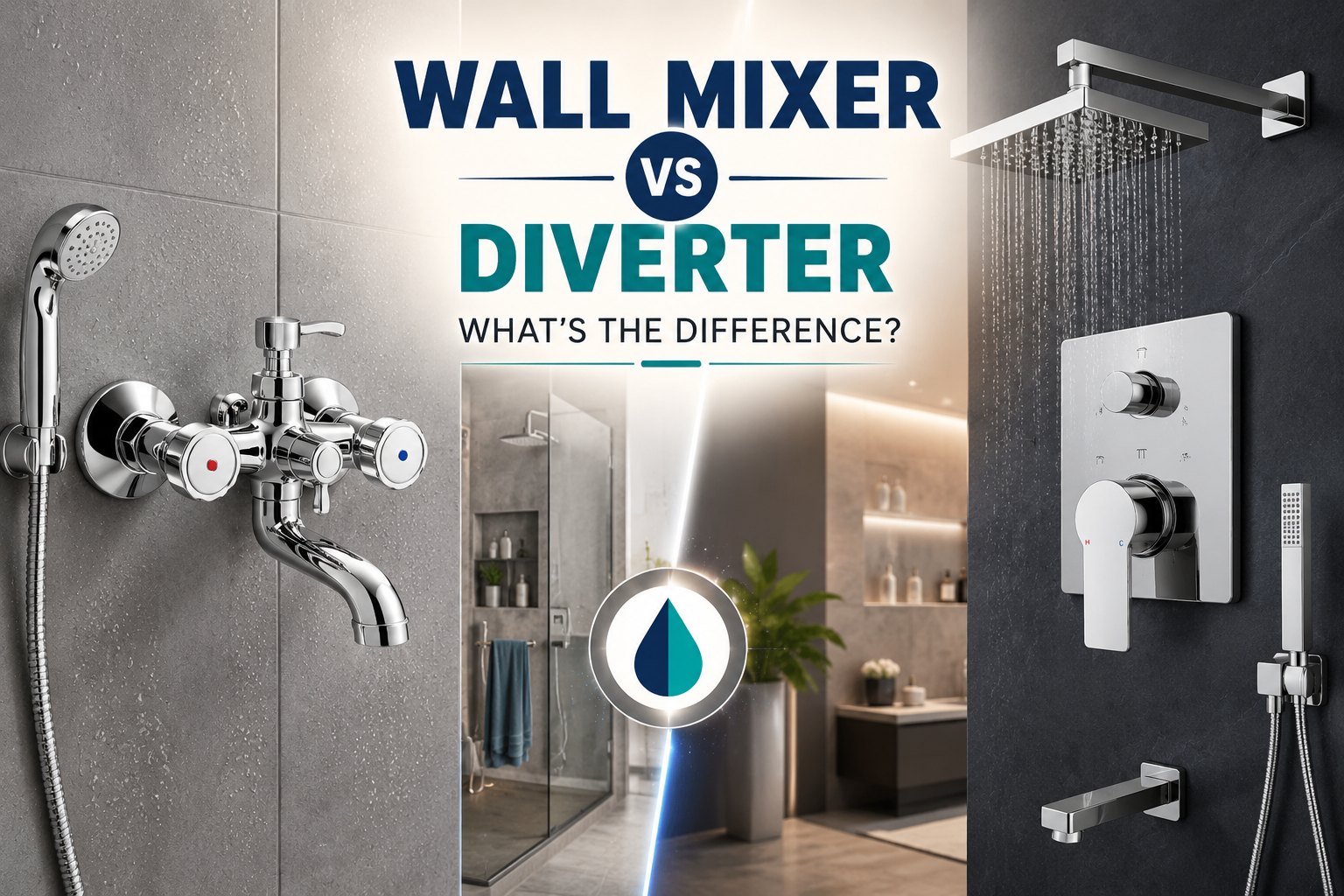
Wall mixers usually feature an exposed installation where the fitting and controls remain visible on the wall. This traditional design is practical and easier to install.
Diverters, on the other hand, are commonly paired with concealed plumbing systems. Most of the internal components stay hidden inside the wall, leaving only the control panel and outlets visible. This creates a cleaner, more modern appearance preferred in luxury bathrooms.
Water Flow Functionality
A wall mixer mainly focuses on mixing hot and cold water while controlling water pressure through a single outlet system.
A diverter functions differently by redirecting water flow between multiple outlets such as hand showers, overhead showers, and bathtub spouts.
This makes diverters more flexible for advanced shower setups.
Installation Requirements
Wall mixers are generally easier and faster to install because they use surface-mounted plumbing connections. They usually require less wall modification during installation.
Diverters often require concealed plumbing work inside the wall, making installation more complex and time-consuming. In many cases, diverters are installed during full bathroom renovations or new construction projects.
Shower Compatibility
Wall mixers work well with standard shower setups and basic hand showers. They are suitable for households looking for simple functionality without additional shower features.
Diverters support multiple shower outlets and provide a more customized shower experience. They are ideal for bathrooms with rain showers, body jets, or combined shower systems.
Maintenance and Repairs
Maintenance is another important factor when comparing wall mixer vs diverter systems.
Wall mixers are easier to repair because most components are externally accessible. Replacing washers, cartridges, or handles is usually straightforward.
Diverters can be slightly more difficult to repair because some internal parts are hidden behind the wall. Accessing concealed plumbing may require additional work if major repairs become necessary.
Cost Comparison
Wall mixers are typically more affordable than diverters in terms of both product cost and installation expenses.
Diverter systems usually cost more because they involve concealed fittings, advanced shower compatibility, and more complex plumbing requirements.
However, many homeowners prefer diverters for their premium appearance and luxury shower experience despite the higher cost.
Choosing between a wall mixer and a diverter ultimately depends on your bathroom size, design preference, budget, and desired shower functionality.
Also Read: Are Heated Towel Rails Worth It
Advantages of a Wall Mixer
Wall mixers remain a popular choice in many households because they are practical, affordable, and easy to maintain. For homeowners comparing wall mixer vs diverter systems, wall mixers offer several advantages, especially for standard bathroom setups.
Easy to Install
One of the biggest benefits of a wall mixer is its simple installation process. Since most wall mixers use exposed fittings and surface-mounted plumbing connections, they require less wall modification during setup.
This makes installation faster and more convenient, particularly in bathroom renovations where concealed plumbing work is not preferred.
Cost-Effective Bathroom Solution
Wall mixers are generally more affordable than diverter systems. Both the product price and installation costs are usually lower, making them a budget-friendly option for homeowners.
For people looking for reliable functionality without spending heavily on luxury bathroom fittings, wall mixers provide excellent value.
Suitable for Compact Bathrooms
Because of their straightforward design, wall mixers work well in small or medium-sized bathrooms. They provide effective water control without requiring complex plumbing systems or multiple outlets.
This makes them ideal for apartments, guest bathrooms, and standard residential spaces.
Simple Maintenance
Wall mixers are easier to repair and maintain because most components remain accessible from the outside. If there is a leak or damaged part, plumbers can usually fix the issue quickly without opening the wall.
Lower maintenance complexity is one reason many homeowners still prefer wall mixers for everyday bathroom use.
Advantages of a Diverter
Diverters are often considered a premium bathroom solution because they offer advanced shower functionality and a more modern appearance. In wall mixer vs diverter comparisons, diverters are usually preferred for luxury bathroom designs and multi-function shower systems.
Modern and Premium Appearance
One of the main reasons homeowners choose diverters is their sleek concealed design. Since most plumbing components remain hidden inside the wall, the bathroom looks cleaner and more elegant.
This minimalistic appearance fits perfectly in contemporary and high-end bathroom interiors.
Supports Multiple Water Outlets
Unlike standard wall mixers, diverters allow users to switch water flow between different outlets such as:
- Overhead rain showers
- Hand showers
- Body jets
- Bathtub spouts
This flexibility creates a more customized and comfortable shower experience.
Better Shower Experience
Diverters are designed for modern shower systems that offer multiple water flow options. Users can easily switch between shower functions depending on their preference.
This added convenience and functionality improve the overall bathing experience significantly.
Space-Saving Concealed Design
Because most diverter plumbing stays hidden behind the wall, the bathroom appears less cluttered and more spacious.
This space-saving design is especially useful for modern bathrooms that focus on clean aesthetics and organized layouts.
Although diverters cost more than wall mixers, many homeowners consider the investment worthwhile for the improved design and enhanced shower functionality.
Wall Mixer Vs Diverter: Which One Is Better?
There is no single answer to the wall mixer vs diverter debate because the better option depends on your bathroom requirements, budget, and design preferences. Both fittings offer unique advantages for different types of users.
Best for Budget-Friendly Bathrooms
If affordability is your main concern, a wall mixer is usually the better choice. Wall mixers are less expensive to purchase and install, making them suitable for homeowners working with limited renovation budgets.
They also provide reliable functionality for standard bathroom needs without requiring advanced plumbing modifications.
Best for Luxury Bathroom Designs
For premium or modern bathrooms, diverters are often the preferred option. Their concealed installation and compatibility with rain showers, body jets, and multiple outlets create a more luxurious appearance and shower experience.
Homeowners focused on aesthetics and modern functionality generally choose diverter systems.
Best for Small Bathrooms
Wall mixers are ideal for compact bathrooms because they require less space and simpler plumbing arrangements.
Their exposed installation also makes repairs easier in smaller spaces where accessing concealed plumbing may be difficult.
Best for Multi-Function Shower Systems
If you want an overhead shower, hand shower, and additional water outlets in the same bathroom, a diverter is the better solution.
Diverters are specifically designed to manage multiple water flow options smoothly and efficiently.
Ultimately, choosing between a wall mixer and a diverter depends on how you plan to use your bathroom. A wall mixer offers simplicity, affordability, and easy maintenance, while a diverter provides a more advanced and luxurious shower setup. Carefully considering your space, plumbing, and long-term needs will help you make the right decision.
Factors to Consider Before Choosing
Choosing between a wall mixer and a diverter is not only about appearance. Several practical factors can influence which fitting will work best for your bathroom. Carefully evaluating these points can help you make a better long-term investment.
Bathroom Size
Bathroom size plays an important role when comparing wall mixer vs diverter systems.
Wall mixers are generally more suitable for compact bathrooms because they require simpler plumbing and fewer shower outlets. Diverters work better in spacious bathrooms where multiple shower functions and concealed fittings can be fully utilized.
Plumbing Setup
Existing plumbing can also affect your choice. Wall mixers are easier to install in bathrooms with exposed plumbing systems or minimal renovation work.
Diverters usually require concealed plumbing inside the wall, which may involve additional construction and installation costs.
Budget
Budget is another major deciding factor.
Wall mixers are more affordable in terms of both installation and maintenance. Diverters typically cost more because of their premium design, concealed systems, and compatibility with advanced shower setups.
Water Pressure
Some multi-function diverter systems require consistent water pressure for proper performance.
If your home has low water pressure, a standard wall mixer may work more efficiently. It is important to check water pressure compatibility before installation.
Design Preference
Homeowners focused on modern aesthetics often prefer diverters because of their sleek concealed appearance.
Those looking for practical functionality and easy maintenance may find wall mixers more suitable for their bathroom needs.
Also Read: Do Bidets Really Improve Bathroom Hygiene?
Common Mistakes to Avoid When Choosing Bathroom Fittings
Selecting the wrong bathroom fitting can lead to unnecessary expenses and functionality problems later. Avoiding these common mistakes can help you choose the right option between a wall mixer and a diverter.
Ignoring Water Pressure Compatibility
Not all shower systems perform well under low water pressure conditions. Installing a diverter system without checking water pressure requirements may affect shower performance significantly.
Always verify whether your plumbing system can support the fitting properly.
Choosing Style Over Functionality
Many homeowners focus only on appearance and ignore practical functionality. While diverters offer a modern look, they may not always be necessary for smaller or budget-friendly bathrooms.
Choosing a fitting that suits your daily needs is more important than following design trends alone.
Poor Plumbing Planning
Improper plumbing planning can create installation difficulties and increase renovation costs.
Diverters usually require concealed plumbing arrangements, so planning the layout early is essential during bathroom construction or remodeling.
Buying Low-Quality Fittings
Cheap bathroom fittings may save money initially but often lead to leakage, corrosion, and maintenance issues later.
Investing in high-quality wall mixers or diverters from trusted brands can improve durability and long-term performance.
Avoiding these mistakes can help you choose a bathroom fitting that balances style, functionality, and reliability effectively.
Conclusion
When comparing wall mixer vs diverter systems, the right choice ultimately depends on your bathroom design, budget, and shower requirements. Wall mixers are practical, affordable, and easy to maintain, making them ideal for standard bathrooms. Diverters, on the other hand, offer a more modern appearance and advanced shower functionality for luxury bathroom setups. By understanding the differences, advantages, and installation requirements of both options, you can choose the bathroom fitting that best matches your needs and long-term comfort.
Frequently Asked Questions
What is the main difference between a wall mixer and a diverter?
A wall mixer mixes hot and cold water, while a diverter redirects water flow between multiple shower outlets.
Is a diverter better than a wall mixer?
A diverter is better for modern multi-shower setups, while a wall mixer is better for simple and budget-friendly bathrooms.
Can a wall mixer work with an overhead shower?
Yes, many wall mixers are compatible with overhead and hand shower attachments.
Which is more expensive, a wall mixer or a diverter?
Diverters are usually more expensive because of concealed installation and advanced shower functionality.
Which option is easier to maintain?
Wall mixers are generally easier to maintain because most components remain externally accessible.