What Is the Standard Size of a Double Bowl Sink?
If you're planning a kitchen renovation or simply replacing an old sink, one of the first questions that comes up is sizing. A double bowl sink is a popular choice for busy kitchens, since it lets you wash and rinse at the same time, or keep dirty dishes on one side while prepping food on the other. But before you buy one, it helps to know what size actually counts as standard, and what to check before it goes anywhere near your benchtop.
What Is the Size of a Double Bowl Sink?
In this guide, we'll walk through typical double bowl sink dimensions, how they compare to single bowl sinks, and what else to measure before choosing the right one for your kitchen.
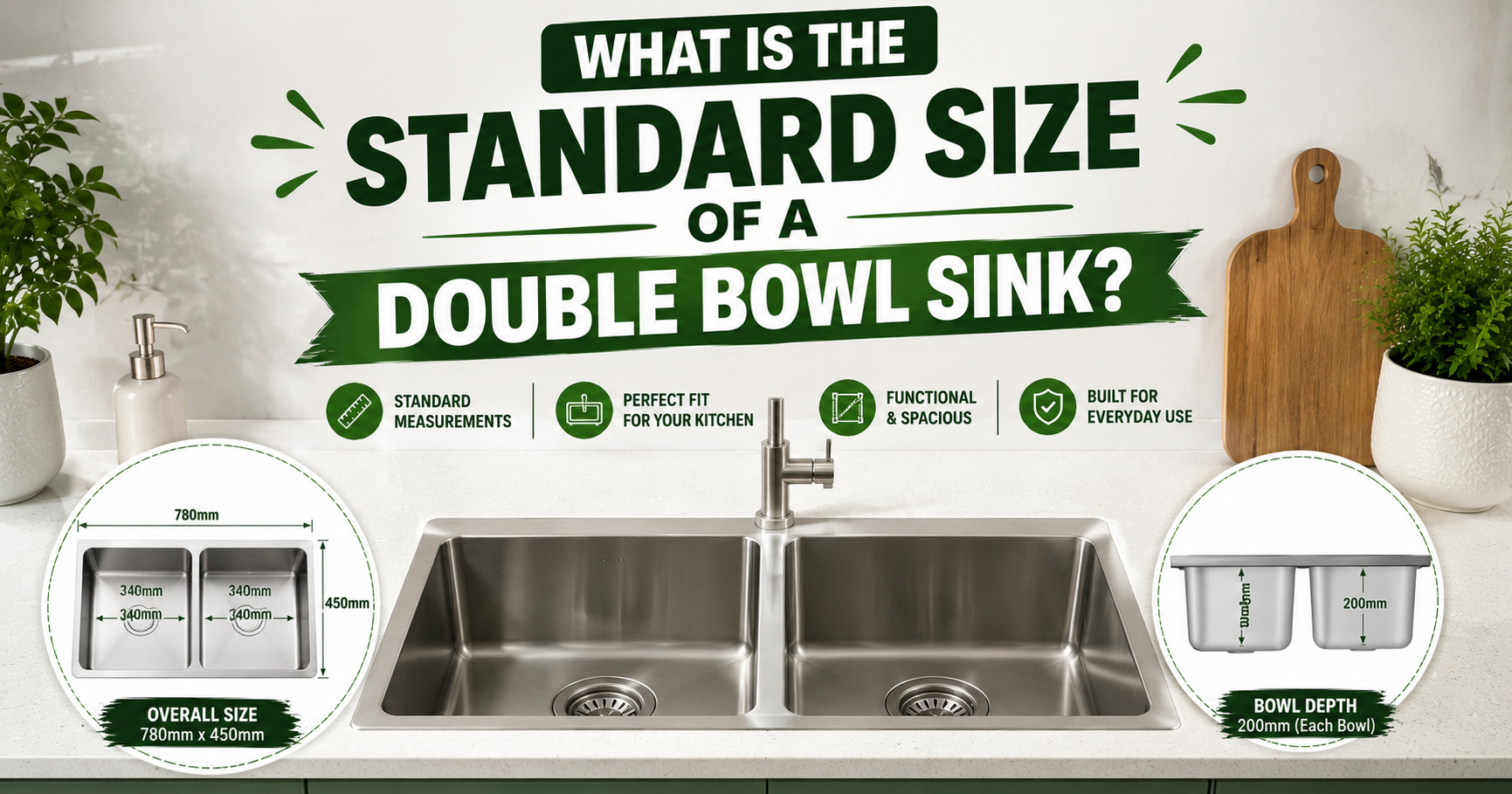
Most double bowl kitchen sinks fall somewhere between 750mm and 900mm wide, with some larger models stretching closer to 1000mm or more. Front-to-back depth is usually around 450mm to 500mm, which is designed to suit a standard 600mm deep benchtop. The depth of each bowl, meaning how far down it goes, typically ranges from 180mm up to around 250mm, depending on the style and how the sink is meant to be used.
That said, there isn't one single fixed measurement that applies to every double bowl sink. Sizes vary between brands and styles, so it's worth treating these numbers as a general guide rather than an exact rule.

Double Bowl vs Single Bowl Sink Sizing
It helps to compare double bowl sinks to their single bowl counterparts to understand the size difference. Single bowl sinks are generally narrower, often ranging from around 400mm to 600mm wide, since they only need to accommodate one basin. Double bowl sinks need more width to fit two separate basins side by side, along with a dividing wall between them, which is why they typically start from around 750mm and go up from there.
This extra width is the main trade-off with a double bowl sink. You get more functionality, being able to use both sides independently, but you need a wider cabinet and benchtop space to fit it properly.
What Affects the Size of a Double Bowl Sink
A few factors influence how big or small a double bowl sink ends up being.
1. Bowl Proportions
Some double bowl sinks have two equal-sized bowls, while others use a 60/40 or similar split, with one bowl larger than the other. A sink with two equal bowls will usually be wider overall than one with a smaller secondary bowl, since both sides need enough room to be genuinely useful.
2. Bowl Depth
Deeper bowls are useful for soaking large pots or hiding a stack of dishes out of sight, but they also require more clearance underneath the sink for plumbing and, in some cases, a garbage disposal unit. Shallower bowls are easier to reach into and better suited to households that mostly use the sink for quick rinsing and food prep.
3. Mounting Style
Undermount sinks, which sit beneath the benchtop with no visible rim, and drop-in sinks, which sit on top with an exposed edge, can have slightly different overall dimensions even if their bowl sizes are similar. This is worth checking closely if you're replacing one mounting style with another.
4. Material and Gauge
Stainless steel, granite composite, and ceramic sinks can all vary slightly in their outer dimensions, even when the bowl capacity is similar, due to differences in wall thickness and manufacturing process.
Measuring Your Space Before Buying
Getting the sizing right isn't just about knowing the standard range, it also comes down to measuring your own kitchen properly.
Check Your Cabinet Width
Open the cabinet below your current sink and measure the internal width from side to side. As a general rule, your new sink should be around 70mm to 80mm narrower than this measurement, to leave enough room for mounting hardware and plumbing.
Measure the Benchtop Cutout
The cutout in your benchtop is almost always smaller than the sink's overall outer dimensions, since the rim needs to sit on solid benchtop material. Manufacturers usually provide a cutout template or specific cutout measurements separate from the sink's overall size, so don't rely on the outer dimensions alone when planning the cut.
Consider Front-to-Back Depth
Most benchtops are around 600mm deep, and a double bowl sink typically needs somewhere between 450mm and 500mm of that depth. Leaving a small gap at the front and back helps avoid the sink sitting too close to the edge of the benchtop or the wall behind it.
Think About Surrounding Bench Space
Since double bowl sinks are wider than single bowl options, it's worth checking how much usable benchtop space you'll have left on either side for food prep, drying racks, or small appliances.
Also Read: Single Bowl Sink vs Double Bowl Sink: Which is the Right Kitchen Sink for You?
Is a Double Bowl Sink Right for Your Kitchen?
Double bowl sinks tend to suit busier households, particularly those without a dishwasher, since having two basins makes it easier to separate washing and rinsing tasks. They're also useful in kitchens where multiple people might be using the sink for different jobs at the same time.
On the other hand, if your kitchen is on the smaller side, or if you regularly need to wash oversized pots, baking trays, or roasting dishes, a single large bowl might actually be more practical than two smaller ones. It's worth thinking about how you actually use your sink day to day, rather than choosing based on size alone.
Common Double Bowl Sink Sizes at a Glance
While exact sizes vary by brand, here's a general idea of what you're likely to come across when shopping:
- Compact double bowl sinks: around 750mm to 800mm wide, suited to smaller kitchens with narrower cabinets.
- Standard double bowl sinks: around 800mm to 900mm wide, the most common range for typical family kitchens.
- Larger double bowl sinks: 900mm and above, better suited to larger kitchens with wider cabinetry and benchtop space.
Depth for most double bowl sinks generally sits between 180mm and 250mm, with deeper bowls becoming more common in modern kitchen designs.
Conclusion
So, what is the standard size of a double bowl sink? In most cases, you're looking at somewhere between 750mm and 900mm wide, with a front-to-back depth of around 450mm to 500mm and bowl depths ranging from 180mm to 250mm. These figures give you a solid starting point, but the only way to be sure a sink will actually fit is to measure your own cabinet, benchtop cutout, and available space before you buy. A bit of measuring now can save you from a costly mismatch later.
Frequently Asked Questions
What is the standard width of a double bowl kitchen sink? Most double bowl sinks range from around 750mm to 900mm wide, though some larger models can extend closer to 1000mm or more, depending on the brand and bowl configuration.
How deep is a standard double bowl sink? Bowl depth typically ranges from 180mm to 250mm, with deeper bowls better suited to soaking large pots and shallower bowls offering easier everyday access.
Do I need a wider cabinet for a double bowl sink compared to a single bowl? Yes. Since a double bowl sink needs to fit two basins plus a dividing wall, it generally requires more cabinet and benchtop width than a single bowl sink.
Is the benchtop cutout the same size as the sink itself? No. The cutout is almost always smaller than the sink's outer dimensions, since the rim needs to rest on solid benchtop material. Always check the manufacturer's cutout template before any cutting takes place.