Bunnings Mixer Taps: How to Choose the Right Basin Mixer Tap
If you've been searching for Bunnings mixer taps, you've probably noticed just how many basin mixer options are out there chrome, matte black, tall, wall-mounted, single-lever, two-handle, and everything in between. Before you add one to your cart, it's worth knowing that the "right" mixer tap isn't the one that looks best in a photo it's the one that actually fits your basin, suits your bathroom's plumbing setup, and matches how you use the space every day. This guide is for homeowners and renovators comparing basin mixer taps before they buy, whether you're doing a full bathroom reno or just replacing a worn-out tap. We'll walk through what a basin mixer actually is, the nine things worth checking before you commit, and answer the questions people usually only think of after installation day.
What Is a Basin Mixer Tap?
A basin mixer tap is a single fitting that blends hot and cold water and delivers it through one spout, usually controlled by a single lever. That's different from traditional basin taps, where you've got two separate taps one for hot, one for cold that you adjust individually to find the right temperature.
Most basin mixers use a single-lever design: push up for more flow, move it left or right for temperature. Some (particularly more traditional-style tapware) use two handles instead, which mimics the classic look of separate taps while still mixing water through one spout. Single-lever mixers have become the standard in modern Australian bathrooms mainly because they're faster to use one-handed and easier to install with just one tap hole.

Basin Mixer vs Traditional Basin Taps
| Feature | Basin Mixer | Traditional Basin Taps |
|---|---|---|
| Controls | Usually one lever | Separate hot/cold |
| Installation | Usually one tap hole | Often two |
| Temperature control | Instant, one motion | Requires balancing two taps |
| Style | Modern | Traditional/classic |
| Space needed | Compact | Requires more benchtop space |
If your basin only has one tap hole, this decision is largely made for you you'll need a mixer. If it has three holes (a common older Australian setup), you've got more flexibility, but you'll want to check the section on basin compatibility below.
Why Compare Basin Mixer Taps Before You Buy
Because "mixer tap" covers such a broad range of products, price and style aren't reliable shortcuts to quality. Before comparing specific taps, it helps to have a simple framework:
- Style range — does the design suit your basin and bathroom layout?
- Finish options — will it match your existing fittings?
- Price point — where does it sit, and what are you actually paying for?
- Water efficiency — what's the WELS rating and flow rate?
- Installation requirements — single-hole or multi-hole, and what's involved?
- Warranty and replacement parts — can you get a new cartridge in five years?
Keep this checklist in mind as you browse it'll save you from choosing on looks alone, which is the single most common mistake people make (more on that shortly).
9 Things to Consider When Choosing a Basin Mixer Tap
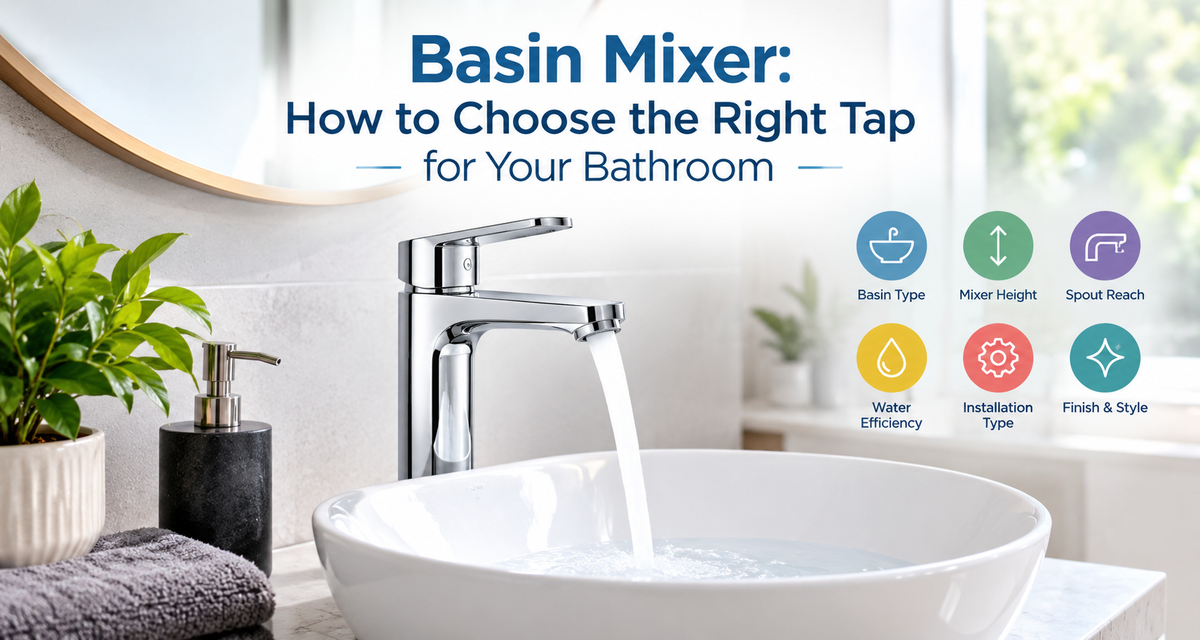
1. Check Your Basin Compatibility
Not every mixer tap fits every basin, and this is the mistake that causes the most return trips to the hardware store. Before you buy, check:
- Number of tap holes — a mixer typically needs one hole; some traditional-style mixers are designed to sit across a three-hole basin
- Tap-hole size — most are a standard diameter, but it's worth double-checking, especially with older basins
- Basin thickness — thicker stone or engineered-stone basins may need a longer tap shank
- Countertop vs inset basin — this affects how the tap body sits and how much clearance you have underneath
- Freestanding or above-counter basins — these usually need a taller mixer to clear the raised bowl
If you're replacing a like-for-like tap, this is quick. If you're renovating and choosing a basin and tap together, buy the basin first, then choose a mixer that suits it not the other way around.
2. Get the Right Tap Height and Spout Reach
How high should a basin mixer tap be? As a general guide, the spout should sit high enough to comfortably wash your hands or fill a basin without your knuckles hitting the bowl, but not so high that water splashes outside the basin. For a standard undermount or inset basin, that usually means a standard-height mixer. For above-counter or vessel-style basins, you'll need a taller mixer to compensate for the extra bowl height.
Spout reach matters just as much as height a spout that's too short can direct water too close to the tap body, while one that's too long can send water past the basin's drain and onto the benchtop. Check the product's reach measurement against where your drain sits before buying.

3. Choose the Right Tap Style
Basin mixers generally fall into a few categories:
- Standard basin mixers — the everyday option, suited to most inset and undermount basins
- Tall basin mixers — built for above-counter and vessel basins
- Wall-mounted mixers — fixed to the wall rather than the basin or benchtop, useful for stone benchtops you don't want to drill, or for a cleaner, minimal look
- Minimalist/contemporary designs — slim, geometric profiles that suit modern bathrooms
- Traditional-style mixers — cross-handles or two-handle designs that suit heritage or classic bathroom renovations
A wall-mounted mixer, for example, makes sense if you've invested in a stone benchtop and don't want to drill through it — but it also means more plumbing work during installation, since the water lines need to run through the wall rather than up through the benchtop.
4. Select a Finish That Matches Your Bathroom
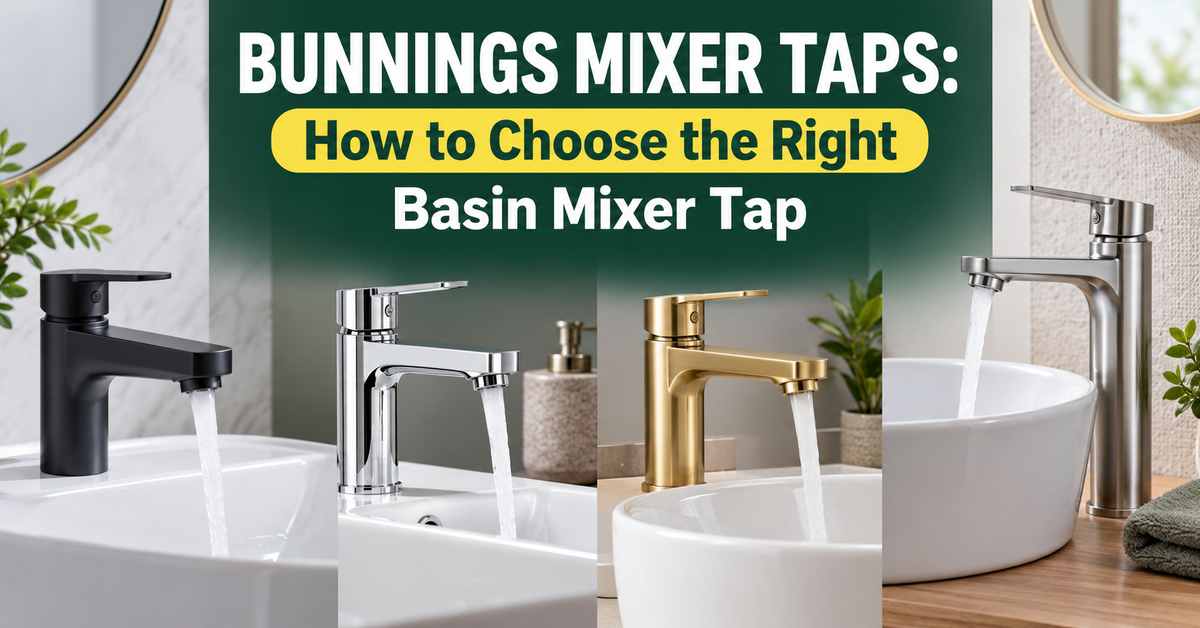
Popular finishes include chrome, matte black, brushed nickel, brushed brass, and stainless-steel-style finishes. A few practical differences worth knowing:
- Chrome is the easiest to clean and shows the least visible mineral buildup, though it does show fingerprints and water spots more obviously
- Matte black basin mixer finishes have become extremely popular for their bold, modern look, but they can show water spots and fingerprints more than chrome — a quick wipe-down after use keeps them looking sharp
- Brushed nickel and brushed brass finishes hide fingerprints and light water marks well thanks to their textured surface, and pair nicely with warmer bathroom palettes
- White finishes suit coastal or Scandinavian-style bathrooms but can be harder to source in matching accessories
Whatever finish you choose, try to match it (or deliberately contrast it) with your shower fittings, towel rails, and other bathroom accessories a chrome basin mixer next to matte black shower fittings tends to look unintentional rather than styled.
5. Check Water Efficiency
For Australian households, water efficiency is worth genuine attention, not just a box-ticking exercise. Look for the tap's WELS rating (Water Efficiency Labelling Scheme) the higher the star rating, the less water it uses per minute at the same water pressure. A higher WELS rating can meaningfully reduce water use over the tap's lifetime without sacrificing everyday performance, since most modern water-efficient mixers use aerators to maintain a strong-feeling flow while using less water.
That said, don't assume a specific product's star rating or flow rate without checking the current listing WELS ratings and specifications can change between batches or over time, so confirm the details on the actual product page before you buy.
6. Consider the Tap Handle and Operation
Single-lever mixers are the most common choice for basin taps because they let you adjust flow and temperature in one motion useful when your hands are already wet or full. Two-handle mixers suit traditional-style bathrooms and give a more precise, separated feel to temperature control, but they take slightly longer to operate and typically need more tap holes.
7. Check the Installation Requirements
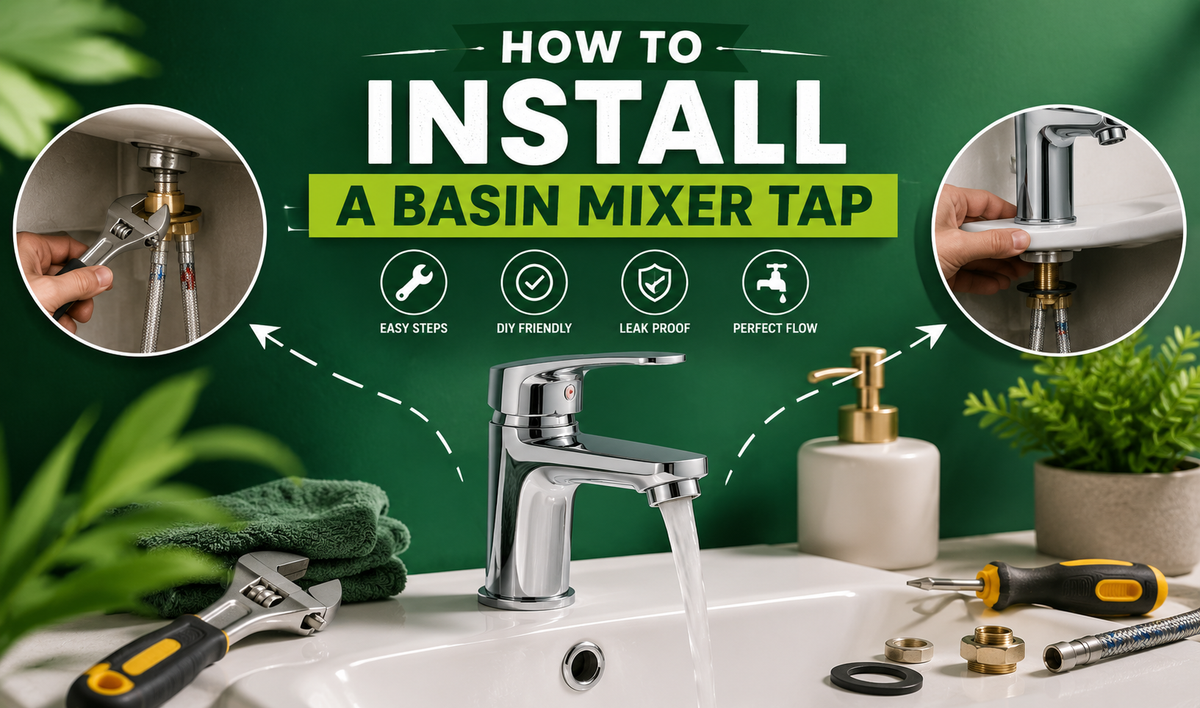
Most basin mixers install through a single hole, connected via flexible hoses to your hot and cold water supply, with isolation valves allowing you to shut off water for maintenance without affecting the rest of the house.
Can I install a basin mixer tap myself? If you're simply replacing an existing mixer with the same configuration, and you're comfortable with basic plumbing, it can be a manageable DIY job. However, if the installation involves moving pipework, changing the number of tap holes, or you're not confident working with water connections, it's worth engaging a licensed plumber Australian plumbing regulations generally require licensed work for anything beyond simple like-for-like fitting replacement.
8. Think About Cleaning and Maintenance
Look for a tap that's easy to wipe down, resistant to limescale and water-spot buildup, and simple to operate day-to-day. Ceramic disc cartridges (standard in most quality mixers) tend to be more durable and less prone to dripping over time than older washer-based designs. Check whether replacement cartridges and parts are readily available a tap that looks great but can't be repaired in five years isn't actually good value.
9. Consider Your Budget and Long-Term Value
Don't focus purely on finding the cheapest tap. Compare across budget, mid-range, and premium options based on:
- Build materials (brass bodies tend to outlast lower-grade alternatives)
- Finish durability
- Cartridge quality
- Warranty length
- Water efficiency
- Availability of replacement parts
- How it fits into the overall lifespan of your bathroom renovation
A slightly higher upfront cost for a tap with a longer warranty and available spare parts is often cheaper over ten years than replacing a budget tap twice.
Best Basin Mixer Styles for Different Bathrooms
| Bathroom Style | Recommended Mixer Style |
|---|---|
| Modern | Minimalist single-lever mixer |
| Small bathroom | Compact standard mixer |
| Luxury bathroom | Premium finish (brushed brass/nickel) |
| Classic bathroom | Traditional-style, two-handle mixer |
| Family bathroom | Durable, easy-clean single-lever mixer |
| Above-counter basin | Tall basin mixer |

What Size Basin Mixer Tap Do You Need?
Sizing comes down to a few measurements: your basin's dimensions, the tap-hole location, the mixer's spout reach and height, and where the water stream lands relative to your drain.
How to Measure Before Buying
- Measure your basin's width and depth.
- Locate the tap hole (or where you'll be drilling one).
- Measure the available clearance around and behind the basin.
- Check the tap's listed height and reach specifications.
- Confirm the spout will land the water stream over the drain, not the edge of the basin.
Bunnings Mixer Taps: What Should You Check on the Product Page?
Whether you're comparing options on Bunnings' website or elsewhere, treat the product page as your main source of truth not the photo. Before adding a tap to your cart, check:
- Product dimensions (height, reach, tap-hole size)
- WELS rating and flow rate
- Finish and material/construction
- Warranty length and terms
- What's included (mounting hardware, hoses, isolation valves)
- Customer reviews, particularly any mentions of dripping, finish wear, or installation issues
- Return and exchange conditions, in case it doesn't fit your basin
This step matters more than it seems a mismatch between what's photographed and what's listed in the specs is one of the most common sources of buyer's remorse with tapware.
Common Mistakes When Buying a Basin Mixer Tap
Choosing based only on appearance. A beautiful tap isn't much use if it doesn't fit your basin's tap-hole configuration.
Ignoring spout reach. Get it wrong and water can miss the drain entirely or splash outside the basin.
Forgetting the WELS rating. A low rating can noticeably increase water use over time.
Not checking tap-hole compatibility. This is the single biggest cause of installation delays.
Mixing bathroom finishes. Chrome shower fittings paired with a matte black basin mixer (without intention) tends to read as mismatched rather than styled.
Buying the cheapest option. Upfront price and long-term value aren't the same thing factor in cartridge quality and parts availability.
How to Choose the Right Basin Mixer for Your Bathroom
A simple way to work through the decision:
Choose your basin → Measure it → Decide on tap height → Select a style → Choose a finish → Check the WELS rating → Confirm installation requirements → Compare warranties → Buy

Conclusion
When you strip it back, the decision comes down to five things: basin compatibility, correct height and reach, water efficiency, style and finish, and overall quality, warranty and long-term value. Get those right, and you'll end up with a tap that looks good and works well for years not just in the first six months.
Before you buy, take five minutes to measure your basin's tap-hole setup and spout clearance, and compare those numbers against the specifications on the product page rather than relying on the photos alone. If you're also choosing a new basin or vanity top as part of your renovation, it's worth selecting the basin first so your mixer tap choice is guided by an exact fit rather than guesswork.
Frequently Asked Questions
Are basin mixer taps universal?
Not entirely while many are a standard tap-hole size, basin thickness, hole configuration, and spout height requirements can vary, so it's worth checking compatibility before buying.
What is the difference between a basin mixer and a sink mixer?
Basin mixers are designed for bathroom hand basins, generally with shorter spout reach and lower flow rates. Sink mixers (kitchen) usually have longer, higher spouts to accommodate pots and larger items.
What size basin mixer do I need?
It depends on your basin type standard height for inset/undermount basins, taller for above-counter or vessel basins. Measure first, as outlined above.
Are Bunnings mixer taps good quality?
Quality varies significantly by brand and price tier, as it does with any large hardware retailer's tapware range. Rather than judging the whole range at once, check the specific product's materials, cartridge type, warranty, and customer reviews before deciding.
What is the best finish for a bathroom mixer tap?
There's no single best finish chrome is the easiest to maintain, matte black offers a bold modern look but shows marks more readily, and brushed finishes hide fingerprints well. Choose based on your bathroom's style and how much upkeep you're willing to do.
Are matte black basin taps hard to clean?
They're not hard to clean, but they do show water spots and fingerprints more visibly than chrome, so they benefit from a quick wipe-down after use.
Do basin mixer taps save water?
A water-efficient mixer with a high WELS rating can use meaningfully less water than an older or low-rated tap, though actual savings depend on the specific product and your household's usage.
Can you replace two taps with a mixer tap?
Yes, in many cases though it typically requires converting from a two- or three-hole basin to a single-hole configuration, which may need extra plumbing work or a new basin.
How long do basin mixer taps last?
A well-made mixer with a quality cartridge can last 10–15 years or longer with basic maintenance, though lifespan depends on water quality, usage, and build quality.
Can I install a basin mixer myself?
Simple like-for-like replacements can often be a manageable DIY task. Anything involving new pipework or changes to your plumbing setup is best left to a licensed plumber.