

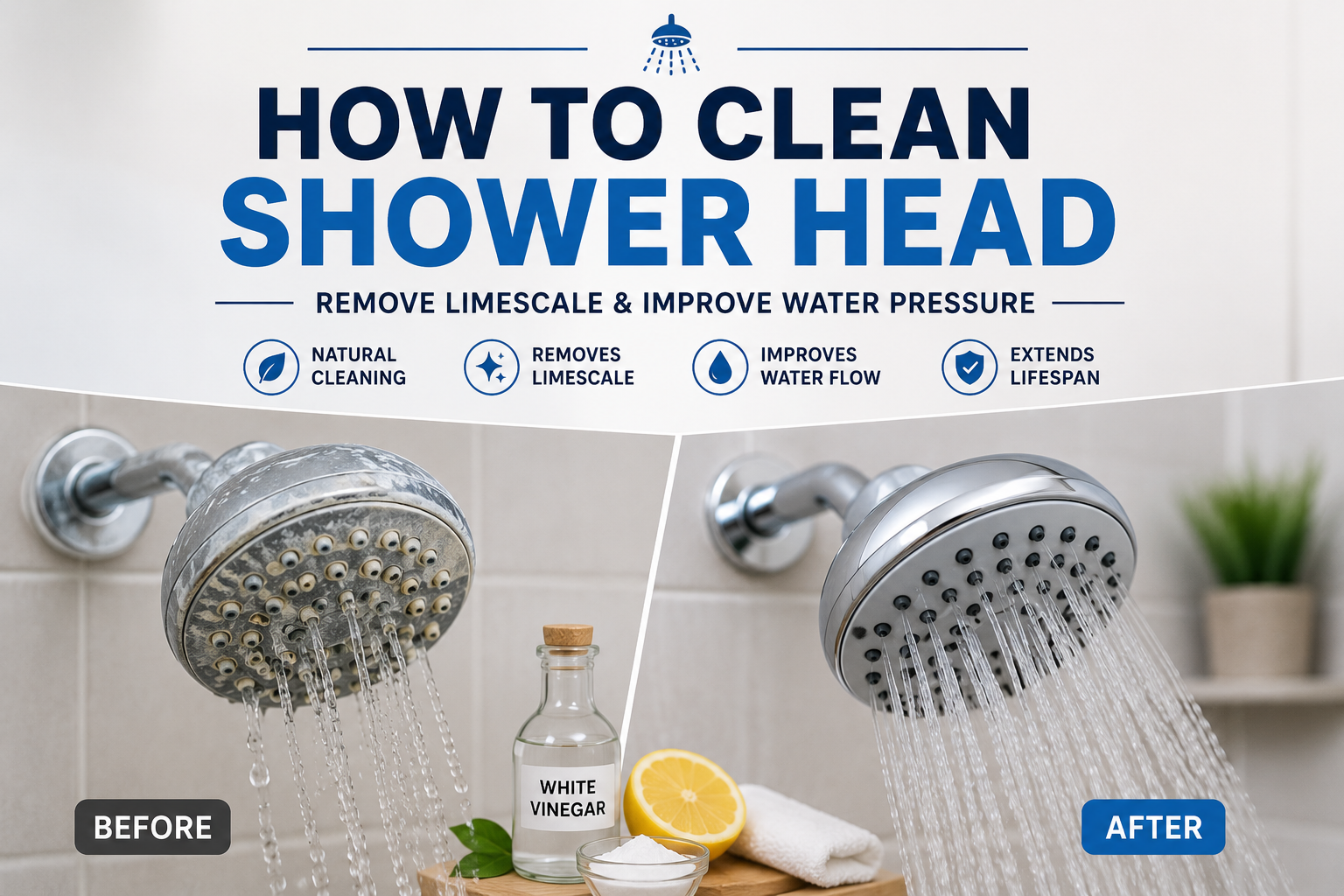
How to Clean Shower Head (Step-by-Step Guide)
If you’re wondering how to clean shower head buildup and restore strong water pressure, you’re not alone. Over time, shower heads collect mineral deposits, limescale, dirt, and even bacteria due to constant exposure to hard water and moisture. This buildup can lead to clogged spray holes, uneven water flow, unpleasant odors, and reduced efficiency. The good news is that learning how to clean shower head fixtures is simple and can be done using basic household items like vinegar and baking soda. With regular cleaning and proper maintenance, you can improve water pressure, extend the lifespan of your shower head, and keep your bathroom cleaner and more hygienic.

Why Cleaning Your Shower Head Is Important
Regular shower head cleaning is an essential part of bathroom maintenance that many homeowners overlook. Over time, mineral deposits, soap residue, dirt, and bacteria can build up inside the shower head, affecting both water quality and performance. Understanding how to clean shower head buildup properly can help improve water flow, maintain hygiene, and extend the life of your bathroom fixtures.
Improves Water Pressure
One of the most common signs of a dirty shower head is weak water pressure. Hard water minerals such as calcium and lime gradually block the small spray holes, restricting water flow and causing uneven spraying.
Cleaning the shower head regularly removes these deposits and helps restore normal water pressure. A properly cleaned shower head allows water to flow evenly, making showers more comfortable and efficient.
Removes Bacteria and Mold
Shower heads are constantly exposed to moisture, creating the perfect environment for bacteria, mold, and mildew growth. Over time, harmful microorganisms can accumulate inside the nozzles and internal components.
Learning how to clean shower head fixtures correctly helps reduce bacteria buildup and keeps your bathroom environment cleaner and healthier.
Extends Shower Head Lifespan
Mineral buildup and corrosion can damage shower heads if left untreated for long periods. Regular cleaning prevents permanent clogging and reduces wear on internal components.
By maintaining your shower head properly, you can avoid unnecessary replacements and keep the fixture functioning efficiently for years.
Saves Water and Improves Efficiency
A clogged shower head often wastes water because the spray becomes uneven or inefficient. Cleaning the nozzles helps improve water distribution and ensures the shower operates at full efficiency.
This not only improves your shower experience but can also help reduce water consumption over time.
Signs Your Shower Head Needs Cleaning
Many people do not realize their shower head needs cleaning until the water flow becomes noticeably worse. Recognizing the early signs of buildup can help you clean the fixture before the problem becomes severe.
Weak Water Pressure
Reduced water pressure is one of the clearest signs that mineral deposits are blocking the shower head nozzles. If the water feels weaker than usual, limescale buildup may be restricting the flow.
In homes with hard water, this issue can develop quickly if the shower head is not cleaned regularly.
Uneven Water Spray
A clean shower head should produce a consistent spray pattern. If water starts spraying in different directions or certain nozzles stop working completely, it usually means debris or mineral deposits are clogging the holes.
Knowing how to clean shower head nozzles properly can help restore even water flow.
Visible White or Green Deposits
Hard water minerals often leave white, chalky, or green-colored deposits around the spray holes and edges of the shower head. These deposits are commonly caused by calcium, magnesium, or limescale buildup.
Ignoring these visible signs can eventually lead to severe clogging and reduced performance.
Strange Smells or Dirty Water
If your shower produces unpleasant odors or discolored water when first turned on, bacteria or trapped debris may be present inside the fixture.
Cleaning the shower head thoroughly can help remove buildup and improve water cleanliness.
Tools and Supplies You Need to Clean a Shower Head
Before starting the cleaning process, it is important to gather the right supplies. The good news is that most shower heads can be cleaned using simple household items that are affordable and easy to find. Having everything ready beforehand will make the process quicker and more effective.
Essential Cleaning Supplies
Here are the basic tools and cleaning products you will need when learning how to clean shower head buildup properly:
- White Vinegar: Vinegar is one of the most effective natural cleaners for dissolving limescale and mineral deposits.
- Baking Soda: Helps remove stubborn residue and adds extra cleaning power when combined with vinegar.
- Plastic Bag: Useful for soaking the shower head without removing it from the wall.
- Rubber Bands or Zip Ties: These secure the vinegar-filled bag around the shower head during soaking.
- Old Toothbrush: Ideal for scrubbing spray holes and removing loosened deposits.
- Soft Cloth or Microfiber Towel: Helps wipe away residue and polish the shower head surface after cleaning.
These simple items are usually enough to clean most standard shower heads effectively.
Optional Cleaning Products
In cases of severe buildup or long-term neglect, additional cleaning tools may be helpful.
- Commercial Limescale Remover: Specialized cleaners can dissolve heavy mineral deposits faster than vinegar alone.
- Needle or Toothpick: Useful for unclogging stubborn spray holes carefully.
- Adjustable Wrench: Needed if you plan to remove the shower head for deep cleaning.
- Plumber’s Tape: Helpful when reinstalling the shower head after removal.
When using commercial cleaning products, always follow the manufacturer’s instructions carefully to avoid damaging the shower head finish.
Preparing the right supplies in advance will make the cleaning process easier and help you remove dirt, bacteria, and hard water buildup more efficiently. With just a few basic tools, you can restore water pressure and keep your shower head functioning like new.
Also Read: How to Replace a Shower Head
How to Clean Shower Head Without Removing It
One of the easiest ways to remove mineral deposits and improve water pressure is by cleaning the shower head without taking it off the wall. This method is simple, effective, and ideal for regular maintenance. If you are learning how to clean shower head buildup for the first time, this technique is a great place to start.
Step 1 – Fill a Bag With Vinegar
Begin by filling a plastic bag halfway with white vinegar. Vinegar works as a natural cleaning solution that helps dissolve calcium, limescale, and hard water deposits inside the shower head.
If the buildup is severe, you can also add a few tablespoons of baking soda to increase the cleaning power. Be careful when mixing vinegar and baking soda because the reaction may create foam initially.
Step 2 – Secure the Bag Around the Shower Head
Place the vinegar-filled bag over the shower head so that all spray nozzles are completely submerged in the liquid.
Use rubber bands, string, or zip ties to secure the bag tightly around the shower arm. Make sure the bag stays in place without leaking.
This soaking method allows the vinegar to break down mineral buildup inside the spray holes and internal components.
Step 3 – Let It Soak for Several Hours
Allow the shower head to soak for at least 2 to 4 hours. For heavy limescale buildup, leaving it overnight often produces better results.
During this time, the vinegar will slowly dissolve hard water deposits and loosen dirt trapped inside the nozzles.
Step 4 – Scrub and Rinse Thoroughly
After soaking, remove the plastic bag carefully and use an old toothbrush to scrub the shower head gently. Focus on the spray holes and outer surface where buildup is most visible.
Turn on the hot water for a few minutes to flush out loosened debris from inside the fixture.
Finally, wipe the shower head with a clean cloth to remove any remaining residue. This simple cleaning method can restore stronger water pressure and improve overall shower performance.
How to Remove and Deep Clean a Shower Head
If regular soaking does not fully remove the buildup, a deep cleaning may be necessary. Removing the shower head allows you to clean the internal parts more thoroughly and clear stubborn blockages effectively.
Step 1 – Unscrew the Shower Head Carefully
Before removing the shower head, turn off the water supply if necessary. Use your hands or an adjustable wrench to loosen the connection carefully.
To avoid scratching the finish, wrap a soft cloth around the fitting before using the wrench. Once loosened, gently unscrew the shower head from the shower arm.
Place the fixture on a towel or flat surface to prevent accidental damage.
Step 2 – Soak It in Vinegar and Baking Soda
Fill a bowl or bucket with white vinegar and place the shower head inside completely. Add a small amount of baking soda for additional cleaning strength.
Allow the shower head to soak for several hours or overnight if the mineral buildup is severe.
This deep soaking process helps dissolve calcium deposits, soap scum, and hard water stains from both the inside and outside of the fixture.
Step 3 – Scrub Away Mineral Deposits
After soaking, use an old toothbrush or soft cleaning brush to scrub all surfaces thoroughly. Pay close attention to the spray nozzles and threaded connection areas where buildup commonly collects.
For stubborn deposits, gently scrape the clogged holes using a toothpick or needle. Avoid using sharp metal tools aggressively, as they may damage the nozzles.
Step 4 – Clean the Nozzles and Filter
Some shower heads contain removable filters or mesh screens inside the connection point. These filters trap debris and mineral particles over time.
Carefully remove the filter if possible and rinse it under warm water. Use a toothbrush to remove any remaining dirt or buildup before reinstalling it.
Cleaning the internal filter can significantly improve water flow and shower performance.
Step 5 – Reattach and Test Water Flow
Once the shower head is fully cleaned, rinse it thoroughly with warm water to remove leftover vinegar and debris.
Reconnect the fixture carefully to the shower arm. If needed, apply fresh plumber’s tape to the threads to prevent leaks.
Turn on the water and check the spray pattern. A properly cleaned shower head should provide stronger pressure and a more even flow.
Also Read: How to Fix a Leaking Shower Head
How to Remove Limescale From a Shower Head
Limescale is one of the most common causes of clogged shower heads, especially in areas with hard water. These chalky white deposits form when minerals such as calcium and magnesium accumulate over time. Understanding how to clean shower head limescale properly can help restore water pressure and improve performance.
Why Limescale Builds Up
Hard water contains high levels of dissolved minerals. As water passes through the shower head repeatedly, these minerals remain behind and gradually harden into limescale deposits.
The buildup usually appears around spray holes, edges, and internal components. If ignored, it can block water flow and reduce efficiency significantly.
Best Natural Methods for Removing Limescale
White vinegar is one of the most effective natural solutions for dissolving limescale. Its acidic properties help break down mineral deposits safely without damaging most shower head materials.
Soaking the shower head in vinegar for several hours often removes light to moderate buildup successfully. Baking soda can also help loosen stubborn residue during scrubbing.
Regular vinegar cleaning helps prevent heavy limescale accumulation and keeps the shower head functioning properly.
When to Use Commercial Cleaners
If natural cleaning methods fail to remove severe buildup, commercial limescale removers may be necessary. These products are designed to dissolve heavy mineral deposits quickly.
However, always follow the product instructions carefully and avoid harsh chemicals that may damage metal finishes or rubber nozzles.
Using the right cleaning method consistently can help maintain strong water pressure and extend the lifespan of your shower head.
Common Mistakes to Avoid When Cleaning a Shower Head
Although cleaning a shower head is a simple DIY task, certain mistakes can damage the fixture or reduce its lifespan. Understanding these common errors can help you clean the shower head more safely and effectively.
Using Harsh Chemicals Incorrectly
Strong chemical cleaners may remove buildup quickly, but some products can damage metal finishes, rubber seals, or plastic components if used improperly.
When learning how to clean shower head fixtures, it is usually safer to start with natural solutions like white vinegar before using aggressive chemicals.
Scratching Metal Finishes
Using steel wool, sharp tools, or rough scrubbing pads can scratch chrome or stainless steel surfaces. These scratches may dull the finish and make future buildup easier.
Always use soft cloths, toothbrushes, or non-abrasive cleaning tools to protect the shower head surface.
Forgetting Internal Filters
Many people only clean the outside of the shower head and ignore internal mesh filters or screens. Over time, these filters collect debris and mineral particles that restrict water flow.
Cleaning the internal filter regularly can improve water pressure significantly.
Not Cleaning Regularly
Waiting too long between cleanings allows mineral deposits and bacteria to build up heavily. Regular maintenance is much easier than removing severe limescale later.
Cleaning the shower head every few weeks helps maintain better performance and hygiene.
How Often Should You Clean a Shower Head?
The frequency of shower head cleaning depends largely on water quality and how often the shower is used. Homes with hard water typically require more frequent maintenance because mineral deposits build up faster.
Weekly Maintenance Tips
A quick weekly wipe-down can help prevent soap scum and water spots from accumulating on the shower head surface.
You can also run hot water through the fixture occasionally to flush out minor debris before buildup becomes severe.
Monthly Deep Cleaning Schedule
For most households, deep cleaning the shower head once every month is usually enough to remove mineral deposits and bacteria effectively.
Soaking the shower head in vinegar regularly can help maintain strong water pressure and prevent clogged nozzles.
Homes With Hard Water Considerations
If your home has hard water, you may need to clean the shower head more frequently. Visible white deposits, uneven spray patterns, or reduced pressure are signs that maintenance is needed sooner.
Installing a water softener may also help reduce limescale buildup and minimize cleaning frequency over time.
Regular maintenance keeps your shower head functioning efficiently and improves the overall shower experience.
Tips to Keep Your Shower Head Clean Longer
Keeping your shower head clean consistently can reduce the need for deep cleaning and help prevent severe mineral buildup. A few simple habits can make a big difference in maintaining water flow and cleanliness.
Wipe Down After Use
After showering, use a soft cloth or towel to wipe excess moisture from the shower head surface. This simple step helps reduce water spots and slows mineral buildup.
Install a Water Softener
Hard water is one of the biggest causes of limescale accumulation. Installing a water softener can reduce calcium and magnesium levels, helping keep your shower head cleaner for longer.
Flush the Shower Head Regularly
Running hot water through the shower head for a minute can help flush out loose debris and prevent small blockages from forming inside the nozzles.
This quick habit can improve water flow and reduce long-term buildup.
Use Vinegar Preventively
Even if the shower head appears clean, soaking it in vinegar every few weeks can prevent hard water deposits from accumulating.
Preventive maintenance is often much easier and faster than dealing with heavy limescale later.
By following these simple practices, you can extend the lifespan of your shower head and maintain strong, even water pressure.
Conclusion
Learning how to clean shower head buildup regularly helps improve water pressure, remove limescale, and keep your bathroom more hygienic. With simple cleaning methods and proper maintenance, you can extend the lifespan of your shower head and maintain better shower performance. If you’re planning to upgrade your bathroom, explore premium-quality shower heads available at Living and Bathroom
for stylish designs and long-lasting performance.
Frequently Asked Questions
Can vinegar damage a shower head?
Vinegar is safe for most shower heads, but avoid soaking delicate finishes for too long.
How long should I soak a shower head in vinegar?
Soak it for 2–4 hours, or overnight for heavy limescale buildup.
What dissolves calcium buildup on shower heads?
White vinegar is the most effective natural solution for calcium deposits.
How do you unclog shower head holes?
Soak the shower head in vinegar and clean the holes with a toothbrush or toothpick.
Is baking soda good for cleaning shower heads?
Yes, baking soda helps remove stubborn dirt and mineral buildup safely.