Recessed vs surface-mounted shaving cabinets
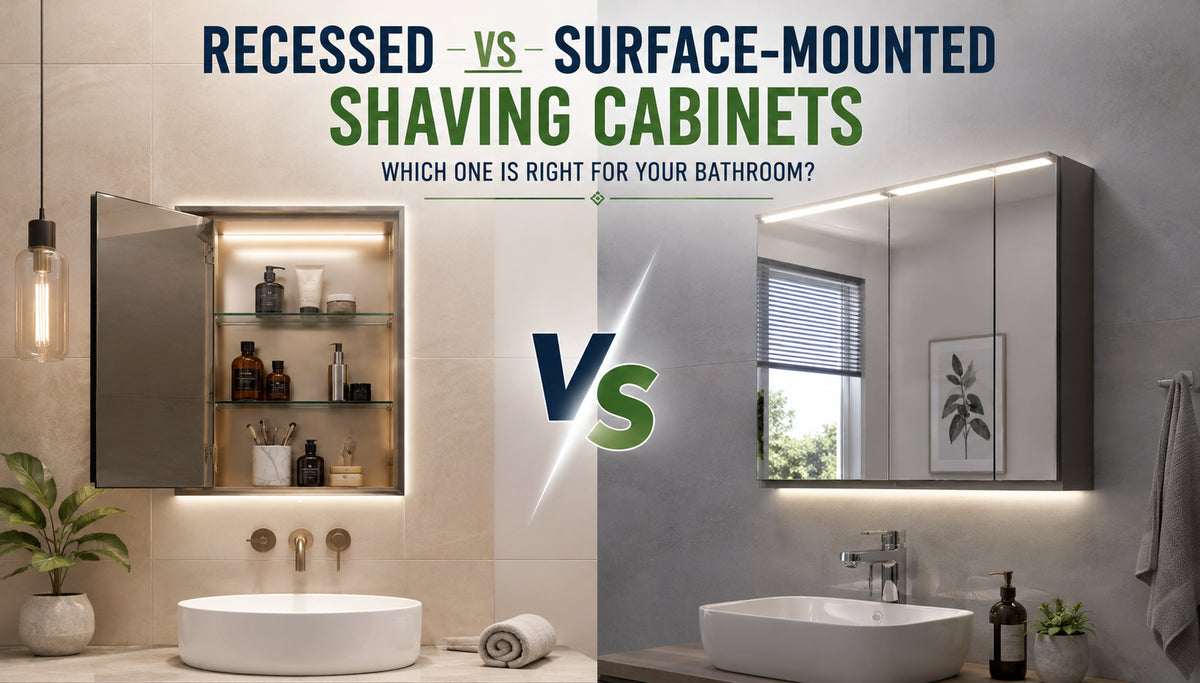
Recessed vs surface-mounted shaving cabinets: which is better for your bathroom? A recessed cabinet sits inside the wall for a flush, built-in look, while a surface-mounted cabinet attaches to the wall and projects into the room. Recessed models save space but need a suitable wall cavity and more installation work. Surface-mounted models are simpler to fit and suit most existing bathrooms. This guide compares both types on installation, storage, appearance, cost and bathroom size, so you can choose with confidence.
What Is a Recessed Shaving Cabinet?
A recessed shaving cabinet is built into the wall. The cabinet body sits inside the wall cavity and only the door and frame show, which creates a streamlined look with very little projection into the room.
How Does a Recessed Shaving Cabinet Work?
A hole is cut into the wall between the studs, and the cabinet is fitted and secured inside it. Because the cabinet needs space behind the wall surface, the wall must be deep enough and clear of pipes, wiring and obstructions.
Where Are Recessed Cabinets Usually Installed?
They are most common in timber-framed walls during a renovation, when the wall is already open or being rebuilt. They are rarely suitable for solid masonry walls or walls that contain plumbing or electrical lines.

What Is a Surface-Mounted Shaving Cabinet?
A surface-mounted shaving cabinet is fixed directly onto the wall surface. The whole cabinet is visible and projects from the wall, so it needs no cutting and leaves the wall structure alone.
How Does a Surface-Mounted Cabinet Work?
It is screwed or anchored into the wall, ideally into studs or with the right wall anchors for the wall type. Most models include mounting hardware, and many can be fitted on tiled walls with the correct tools.
Why Are They Popular in Bathroom Renovations?
They suit most existing bathrooms, they come in the widest range of shapes and finishes, and they are easier to replace later. You can explore our range of mirror cabinets to see the styles available.

Recessed vs Surface-Mounted Shaving Cabinets
The main difference in recessed vs surface-mounted shaving cabinets is how they are installed, and that affects the look, the cost and where each one can go.
| Comparison | Recessed cabinet | Surface-mounted cabinet |
|---|---|---|
| Installation | Fitted inside the wall cavity | Attached to the wall surface |
| Appearance | Streamlined, built-in look | Visible projection from the wall |
| Wall modification | Usually required | Usually not required |
| Space | Reduces projection into the room | Takes up visible depth |
| Best for | Renovations and new builds | Existing bathrooms and rentals |
| Installation complexity | Generally higher | Generally simpler |
| Storage | Depends on the cavity and model | Depends on the model |
Appearance and Bathroom Style
Recessed cabinets blend into the wall, which suits clean, modern designs. Surface-mounted cabinets can become a feature, especially when you match the frame finish to your tapware. Browse our bathroom mirrors and wall mirrors for ideas.
Installation Requirements
A recessed cabinet needs a wall cavity of enough depth, clear space between studs and no pipes or wiring in the way. A surface-mounted cabinet needs a solid fixing point and enough clear wall space for its width and door swing.
Storage Space and Cabinet Depth
Do not assume one type holds more. Storage depends on the cabinet’s internal depth and the available cavity, so compare the product specifications for each model. A recessed cabinet is limited by the wall depth, while a surface-mounted cabinet is limited by how far you are happy for it to project.
Cleaning and Maintenance
A flush recessed frame has fewer edges to dust, while a surface-mounted cabinet has visible sides and a top that need wiping. Both need a moisture-resistant finish in a steamy bathroom, so good bathroom ventilation helps protect either type.
Pros and Cons of Recessed vs Surface-Mounted Shaving Cabinets
Recessed cabinets
- Advantages: a seamless built-in look, minimal projection and a tidy appearance in compact rooms.
- Disadvantages: wall cutting, higher installation effort, limits from studs and services, and less flexibility if you want to change later.
Surface-mounted cabinets
- Advantages: simpler installation, no wall modification, easy replacement and a wide choice of styles.
- Disadvantages: visible depth, possible clearance problems above a vanity and a less integrated look.
Which Shaving Cabinet Is Better for a Small Bathroom?
For a small ensuite or powder room, recessed vs surface-mounted shaving cabinets is mostly a question of movement and comfort. A recessed cabinet keeps the wall clear, which helps in narrow rooms where people brush past the vanity. A surface-mounted cabinet works well when the wall is solid or tiled, as long as you check how far it projects.
How Cabinet Depth Affects Bathroom Space
Even a few extra centimetres of projection can make a compact bathroom feel tighter. Pair a slimmer cabinet with a narrow vanity or a wall hung vanity to keep the floor and walls feeling open.
Can Your Wall Take a Recessed Cabinet?
Before choosing between recessed vs surface-mounted shaving cabinets, check what is behind the wall. In many timber-framed Australian homes, wall studs are commonly around 70 mm or 90 mm deep, so confirm this and compare it with the cabinet’s recess depth and cut-out size.
- Timber-framed walls: often suitable, if the cavity is clear of pipes and wiring.
- Brick, block or concrete walls: usually not suitable for recessing without major work.
- Tiled walls: can take a surface-mounted cabinet with the right drill bits and fixings, but cutting a recess into tiles is more involved.
- Wet areas: bathrooms must be waterproofed to meet requirements such as AS 3740. Cutting into a waterproofed wall, especially near the shower, can affect that protection. The Victorian Building Authority explains these wet area requirements, and you can view the standard on the Standards Australia store.
A qualified builder or installer should assess the wall before anyone cuts into it.
How Much Does It Cost to Install a Shaving Cabinet?
Prices vary too much by product and location to give one figure, so it helps to separate the costs. When comparing recessed vs surface-mounted shaving cabinets, think about:
- The cabinet itself: size, finish, glass quality and features such as LED lighting.
- Labour: a recessed cabinet usually takes longer than a surface-mounted one.
- Wall work: cutting, framing, patching and repainting or retiling for a recessed model.
- Electrical work: a licensed electrician is required for hardwired lighting or demisters.
- Relocating services: pipes or wiring in the way can add significantly to the cost.
Ask for written quotes that list each of these items so you can compare like for like.
Is a Semi-Recessed Shaving Cabinet a Good Alternative?
A semi-recessed cabinet sits partly inside the wall and partly projects from it. It reduces projection compared with a surface-mounted cabinet without needing a full-depth cavity. It can suit a shallow wall, or a homeowner who wants less bulk but less wall work. When weighing recessed vs surface-mounted shaving cabinets, ask whether a semi-recessed model gives you the best compromise.
What to Check Before You Buy a Shaving Cabinet
Use this checklist for recessed vs surface-mounted shaving cabinets:
- Measure the wall space for width, height and the clearance above the basin.
- Check the wall construction and stud positions, and look for pipes and wiring.
- Check cabinet depth and internal storage against what you plan to store.
- Check door swing and clearance so doors do not hit tapware or walls.
- Consider LED lighting and demisters, and confirm who will do the electrical work.
- Check the finish is suitable for a humid bathroom.
Compare LED bathroom mirrors if you want built-in lighting, and add bathroom shelves or a tallboy if you need extra storage.
Conclusion
Choose a recessed cabinet when you wbathroom mirrorsant a streamlined look, you are renovating and your wall has a suitable, clear cavity. Choose a surface-mounted cabinet when you want simpler installation, you are renting or the wall is solid, tiled or full of services. If neither feels right, consider a semi-recessed model. That is the simplest way to settle recessed vs surface-mounted shaving cabinets for your own bathroom. Compare dimensions, check the wall and confirm installation requirements before you buy. When you are ready, browse our mirror cabinets, check delivery information, or contact our team for help choosing.
Frequently Asked Questions
Are Recessed vs Surface-Mounted Shaving Cabinets Different in Storage?
They can be. Storage depends on each model’s internal depth and the available wall cavity, so compare specifications rather than assuming one type holds more.
Are recessed shaving cabinets better than surface-mounted ones?
Neither is better for everyone. Recessed cabinets give a built-in look and less projection, while surface-mounted cabinets are simpler to install and suit more walls.
Can you convert a surface-mounted shaving cabinet into a recessed one?
Not usually. A recessed cabinet needs a body designed for in-wall fitting and a cut-out in the wall. Check the manufacturer’s instructions for any convertible model.
Are surface-mounted shaving cabinets easier to install?
Generally yes, because they do not need cutting into the wall. You still need secure fixings and, for lit models, a licensed electrician.
Can a shaving cabinet be installed on a tiled wall?
A surface-mounted cabinet can, using the right drill bit and fixings. A recessed cabinet in a tiled wall needs more work, and waterproofing should be considered.
How deep should a bathroom shaving cabinet be?
It depends on the space and what you store. Check the cabinet’s overall depth, its internal depth and how far it will project from the wall.